Glacial Shaping
How glaciers sculpt the landscape
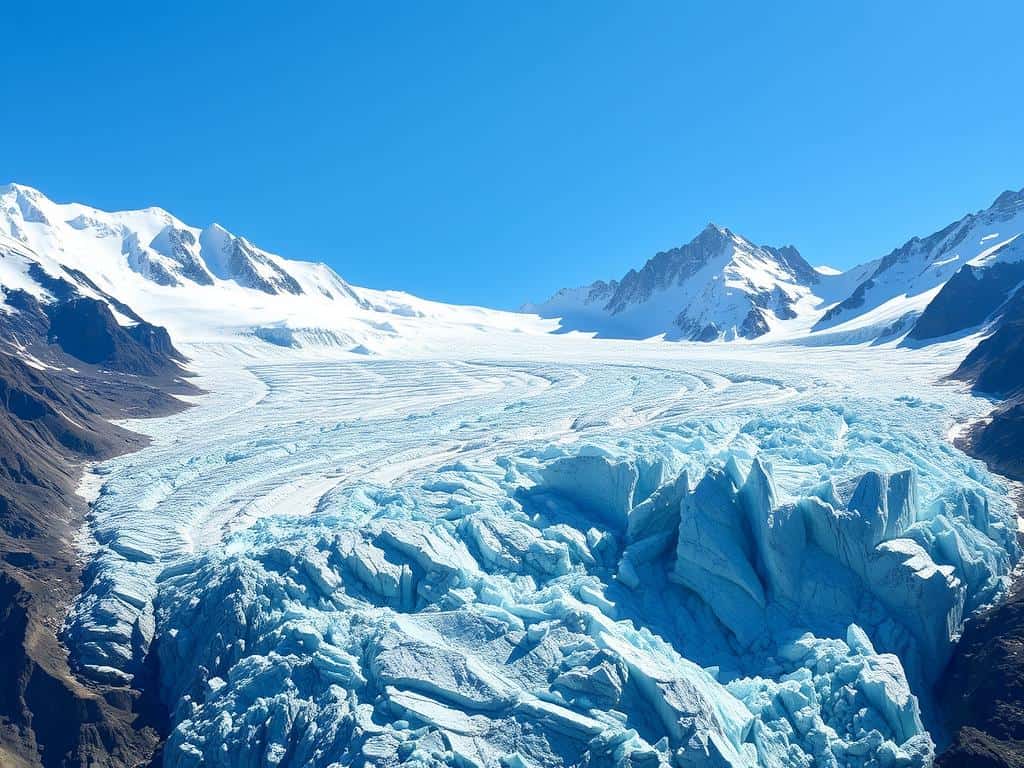
Glaciers are among the greatest sculptors of mountains. They form through the compaction and recrystallisation of snow, when more snow falls in winter than melts in summer. Under the pull of gravity, these immense bodies of ice move slowly downhill – from just a few metres to several dozen metres per year – deeply transforming the alpine environment.
1
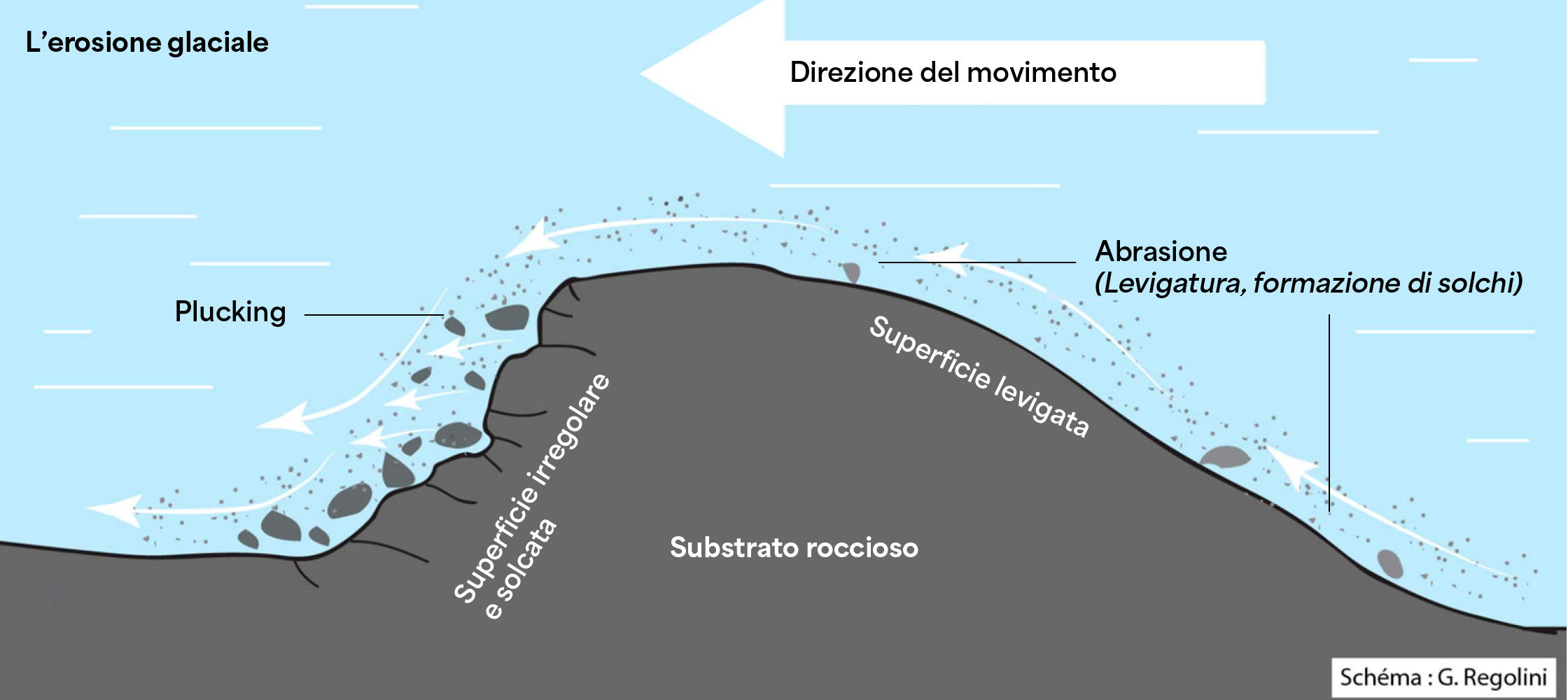
The landscape we know today is the result of millennia of erosive processes, mainly driven by two mechanisms: abrasion and plucking.
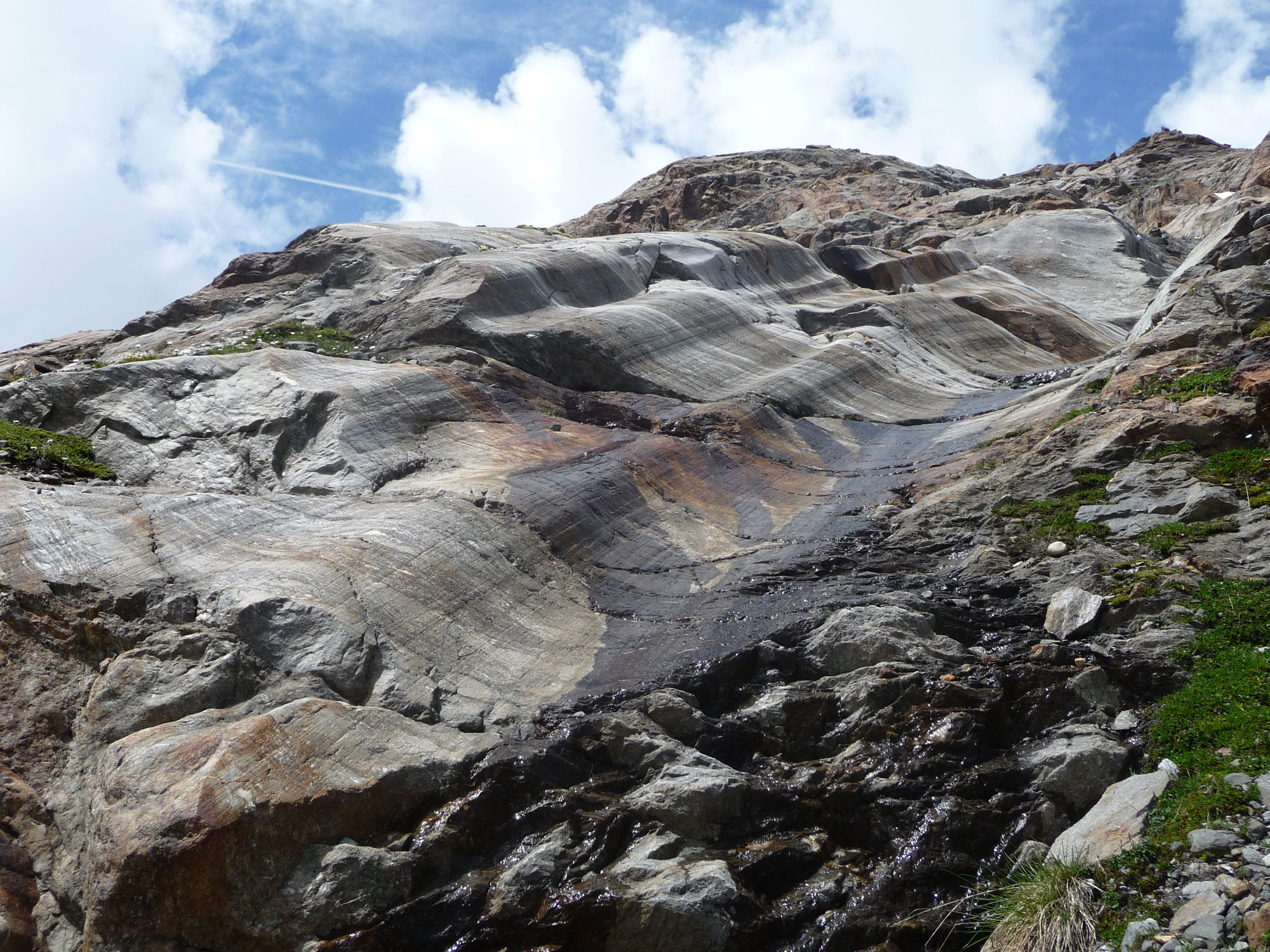
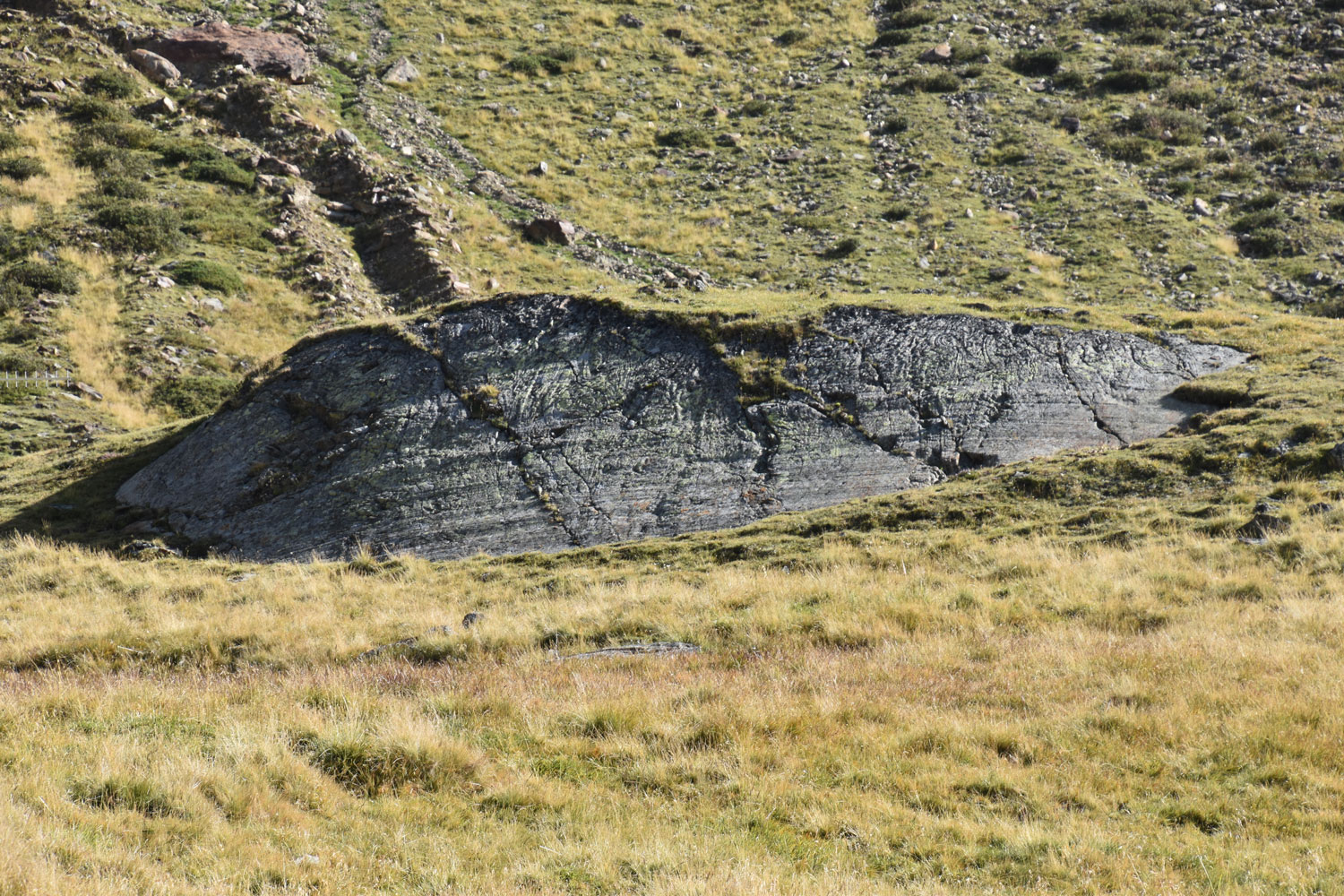
Abrasion – At the glacier’s base, debris trapped in the ice acts like natural sandpaper. As the glacier moves, it polishes the underlying rock, leaving behind smooth surfaces marked with striations and grooves. Sometimes, rounded and asymmetrical forms emerge – known as roche moutonnées – that reveal the direction of the glacier’s flow.
Plucking – When meltwater seeps into cracks in the rock and freezes, it expands and breaks blocks apart. These fragments are then carried away by the ice, enriching the moraines with debris and further reshaping the land.
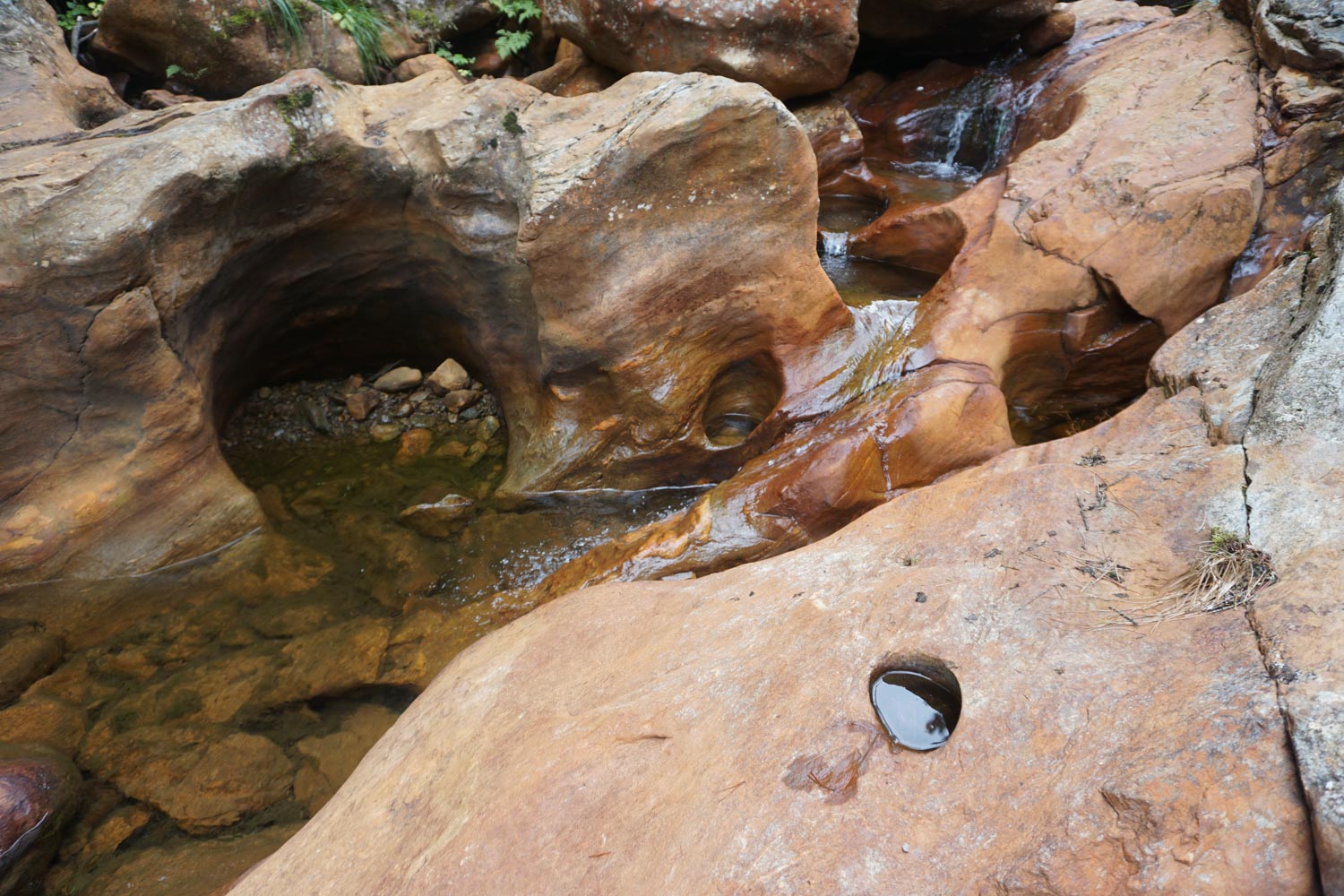
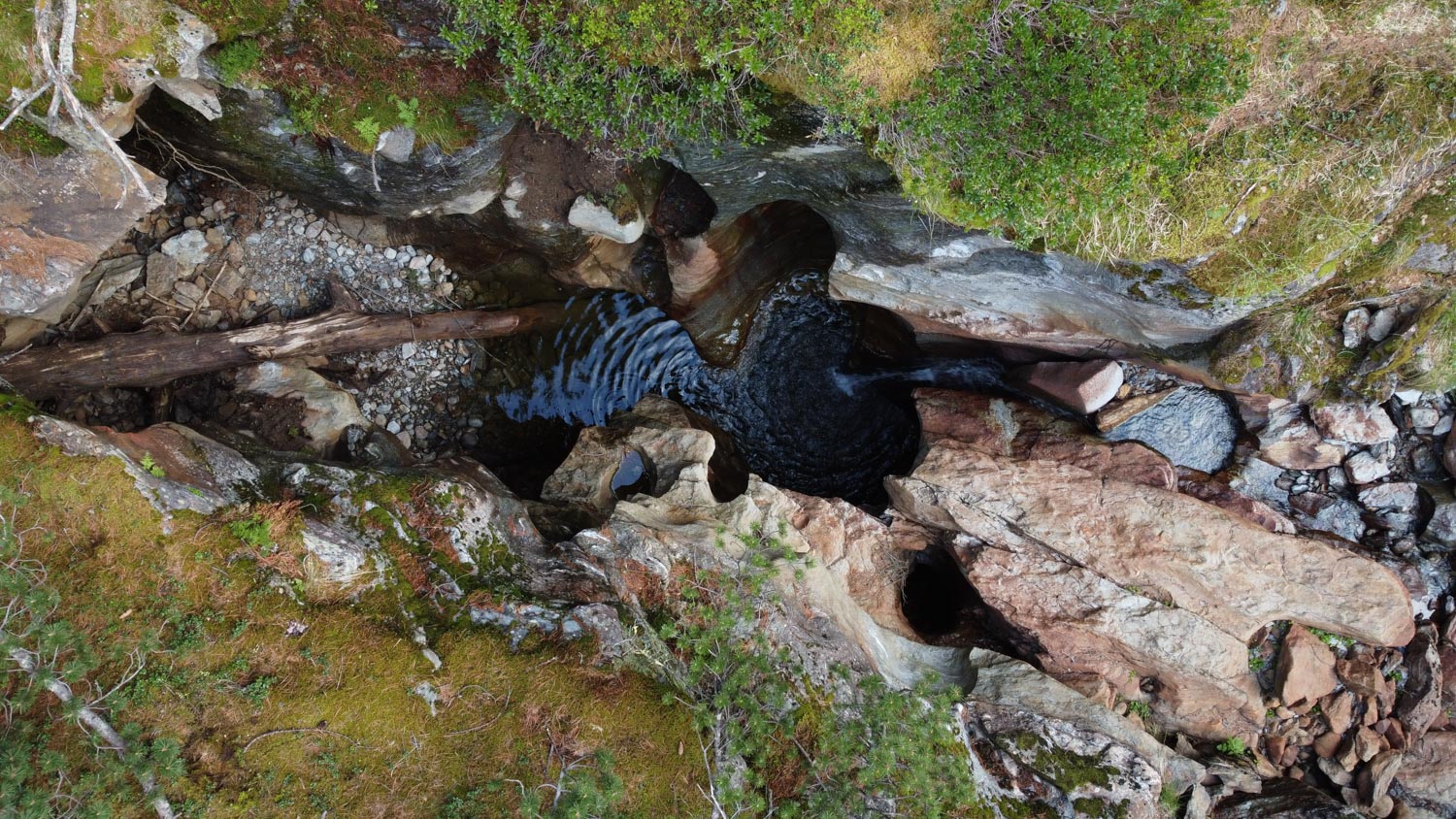
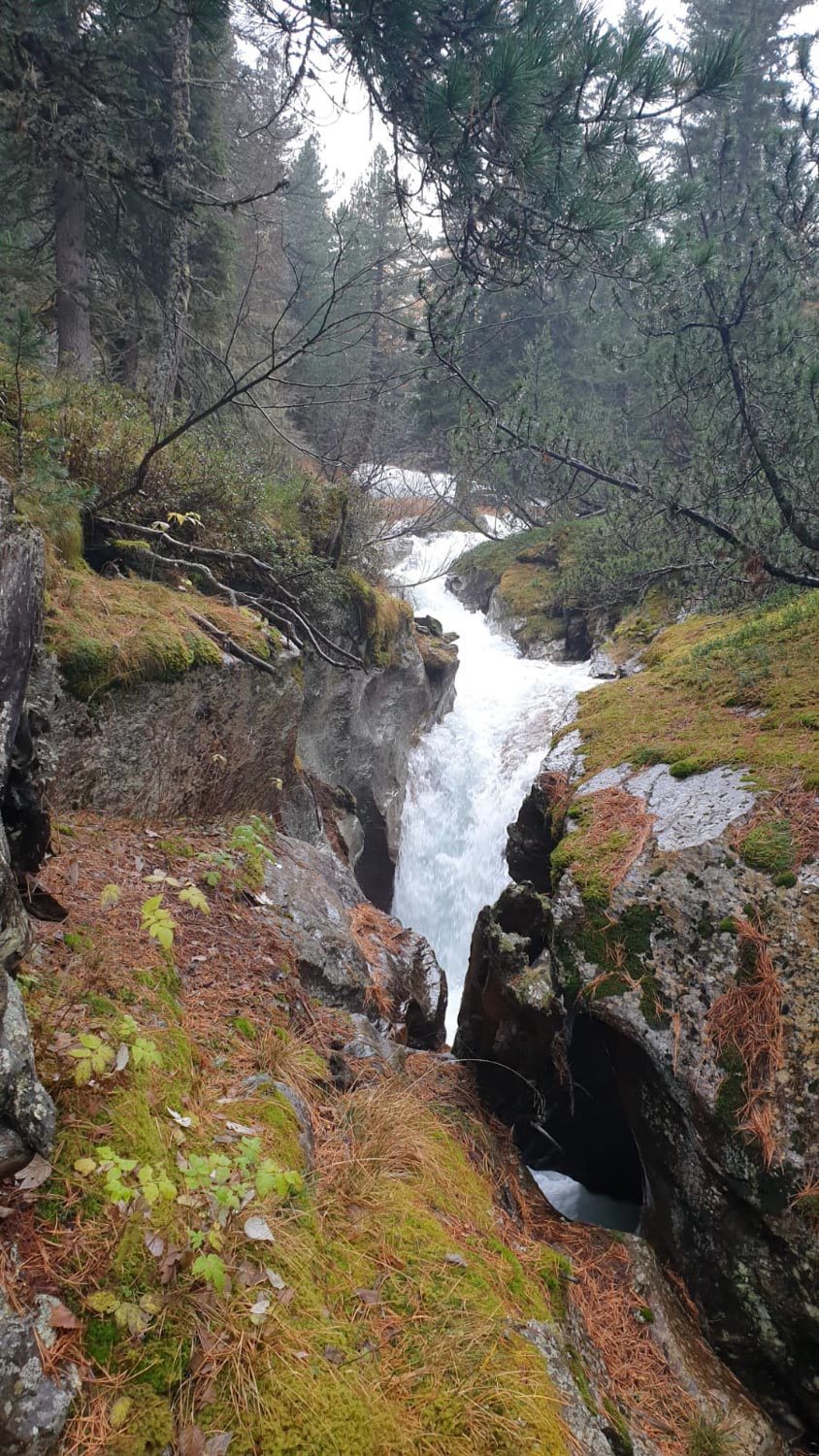
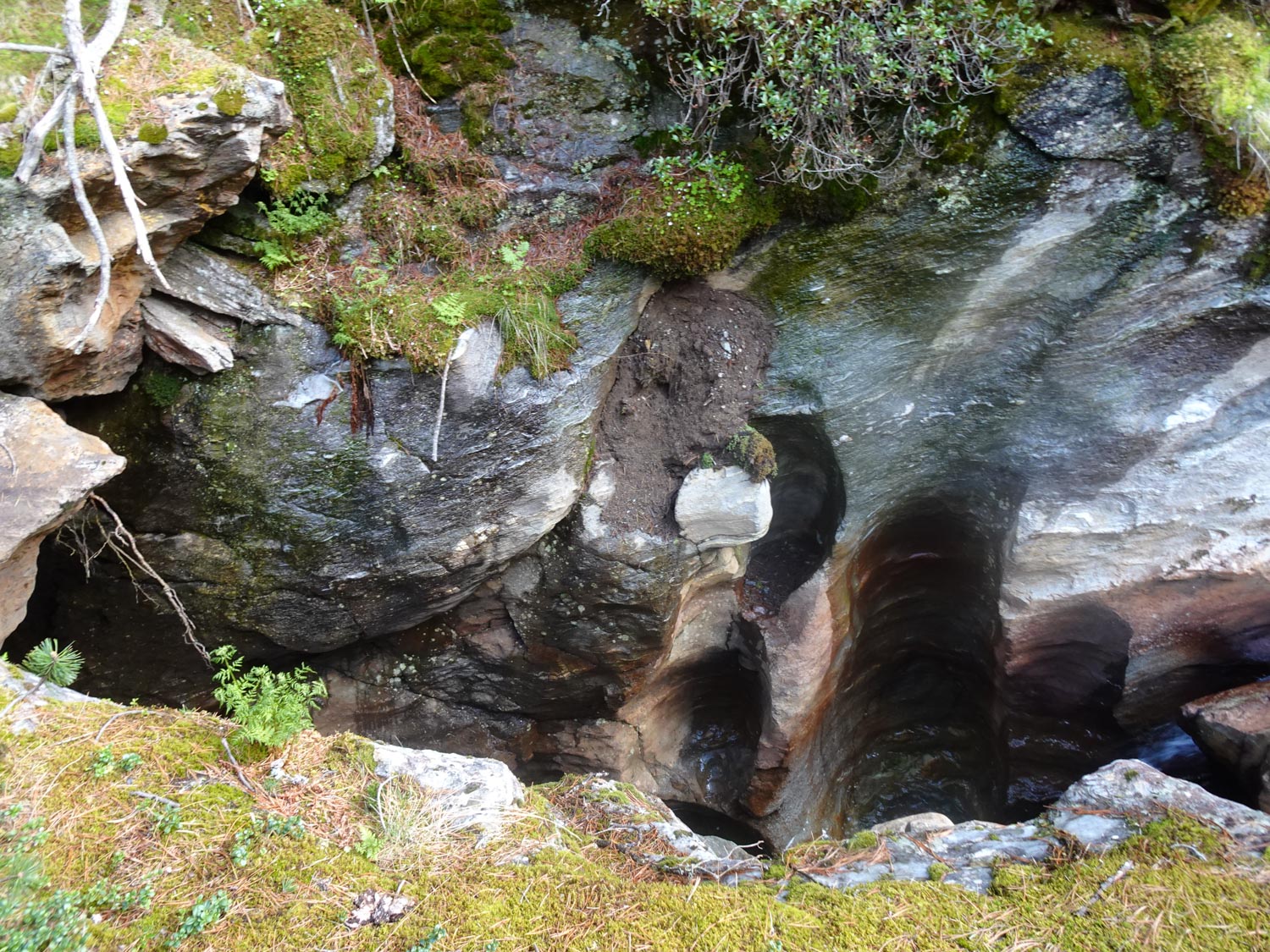
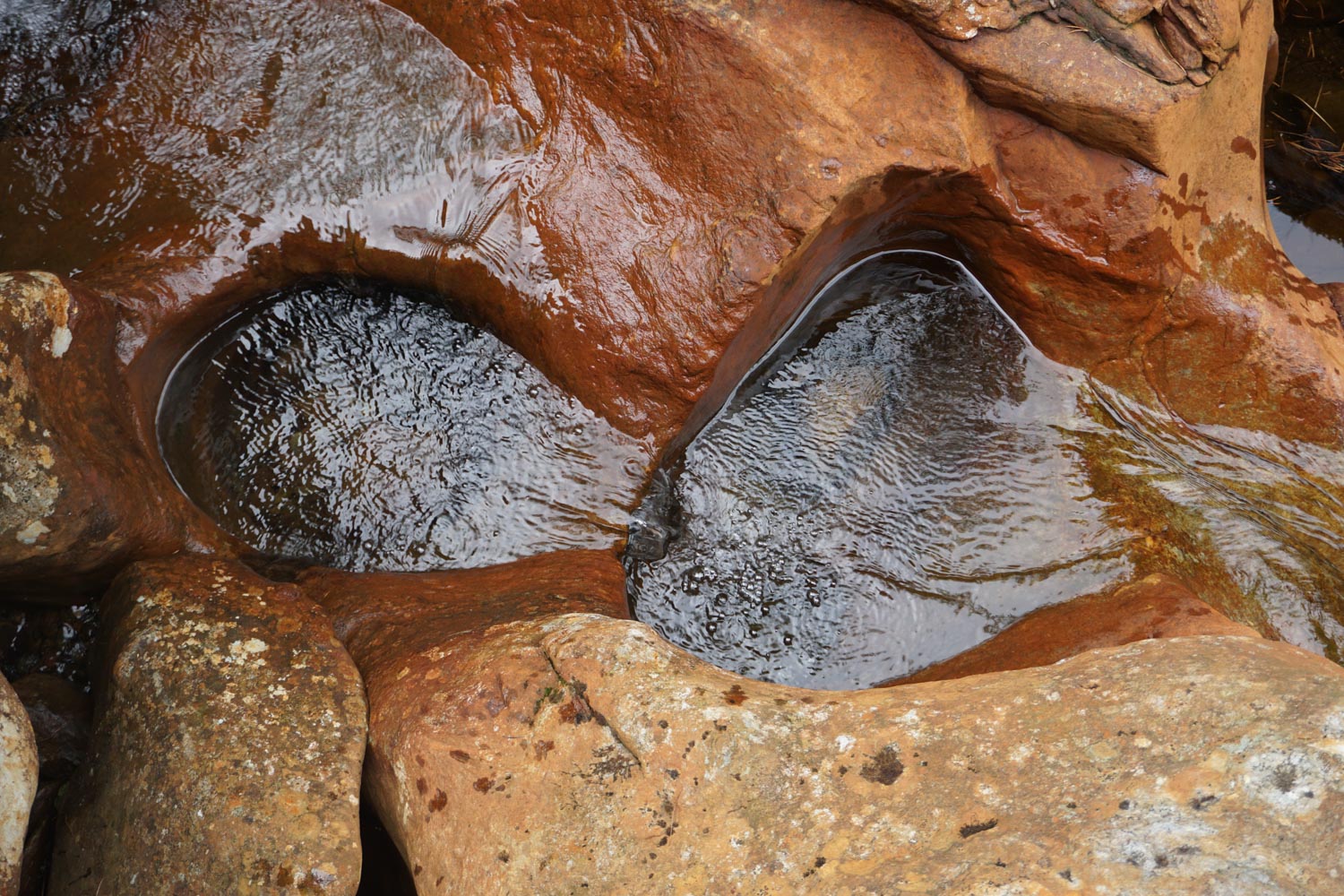
Meltwater also plays a crucial role. In temperate glaciers, it often flows under pressure beneath the ice, carving channels that can grow into deep gorges and glacial canyons. The strength of this erosion depends on factors such as water volume, turbulence, and the hardness of the bedrock.
This is how the Ulten Valley might have looked at this point 15,000 years ago.