
Roches moutonnées
The glacier’s signature on the landscape
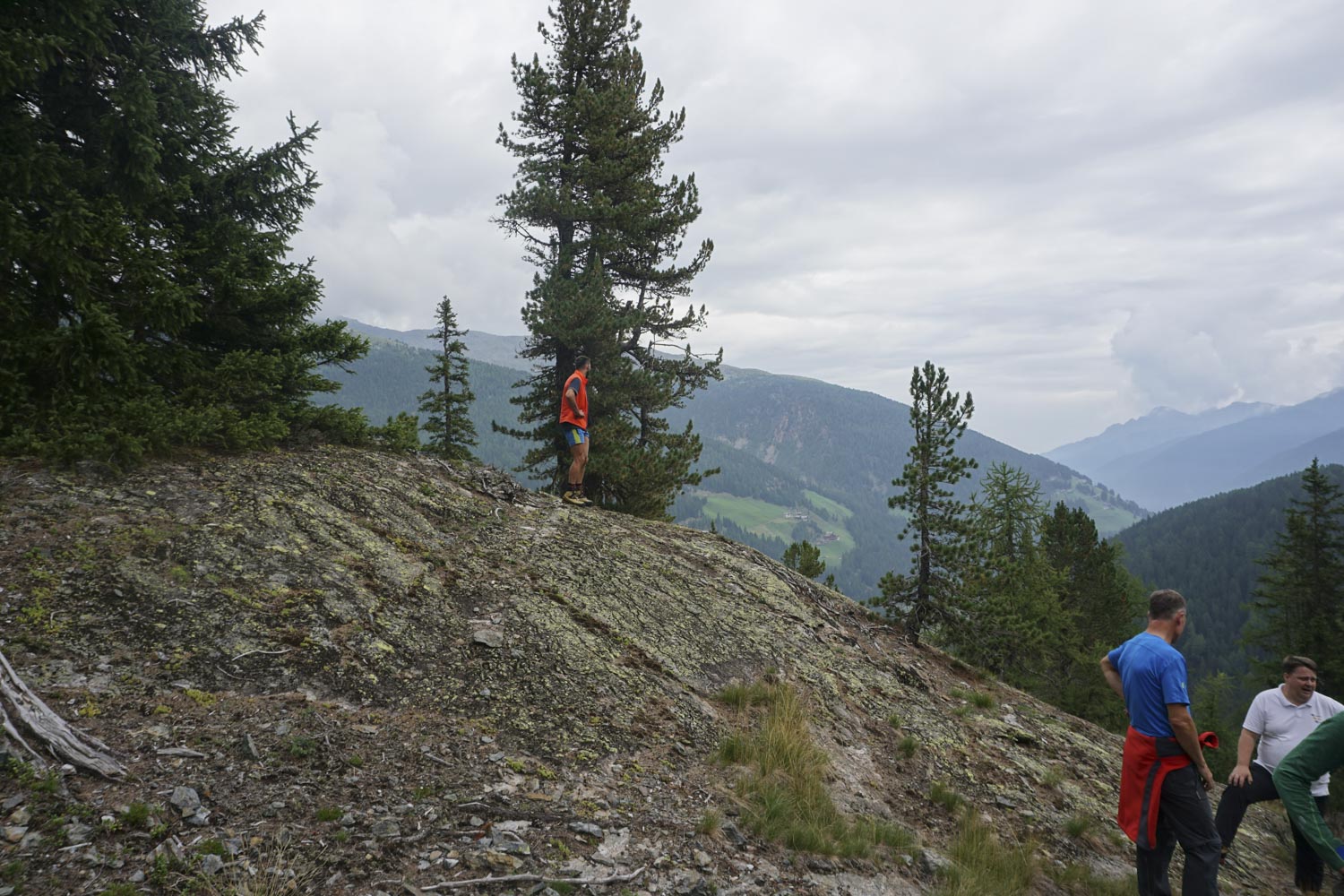
Roches moutonnées, or sheepback rocks, are elongated, smoothed outcrops sculpted by glaciers. Their asymmetrical shape reflects two contrasting erosive processes: on the stoss (up-glacier) side, the ice and the debris it carried polished the bedrock through abrasion, leaving smooth surfaces with visible glacial striations. On the lee (down-glacier) side, the dominant process was plucking: water seeped into cracks, froze, expanded, and fractured the rock, creating rougher, jagged surfaces.
3
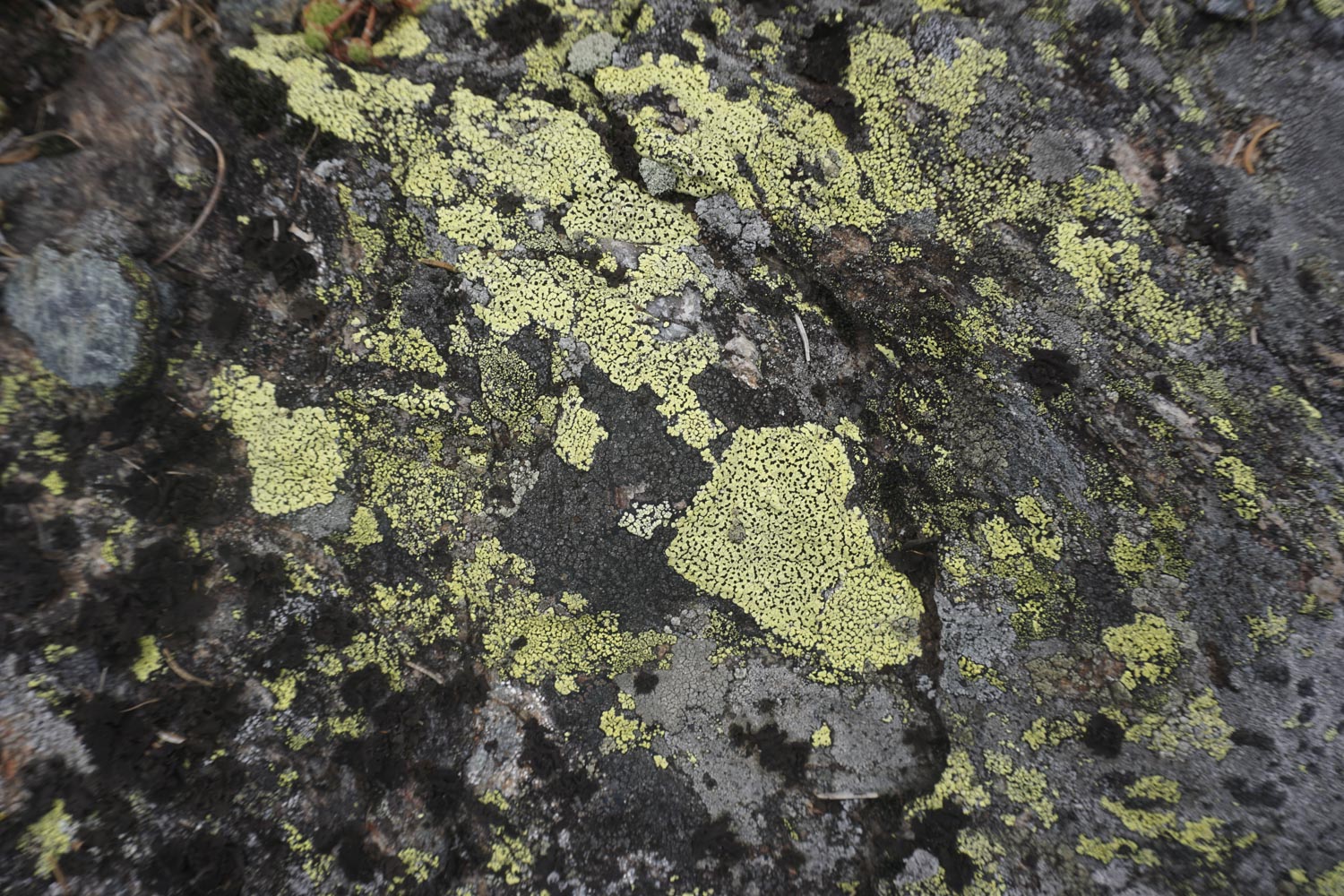
Often, these rocks are colonised by the map lichen (Rhizocarpon geographicum), easily recognised by its yellow-green patches dotted with black spots resembling a map. With its extremely slow growth – just a few tenths of a millimetre per year – it serves as an indicator of how long the rock has been exposed, although it does not allow precise dating.
Did you know?
The term roche moutonnée was coined in the 18th century by the naturalist Horace-Bénédict de Saussure. It refers to their resemblance to the waved wigs of the time, which were kept in shape with sheep’s fat (mouton in French).
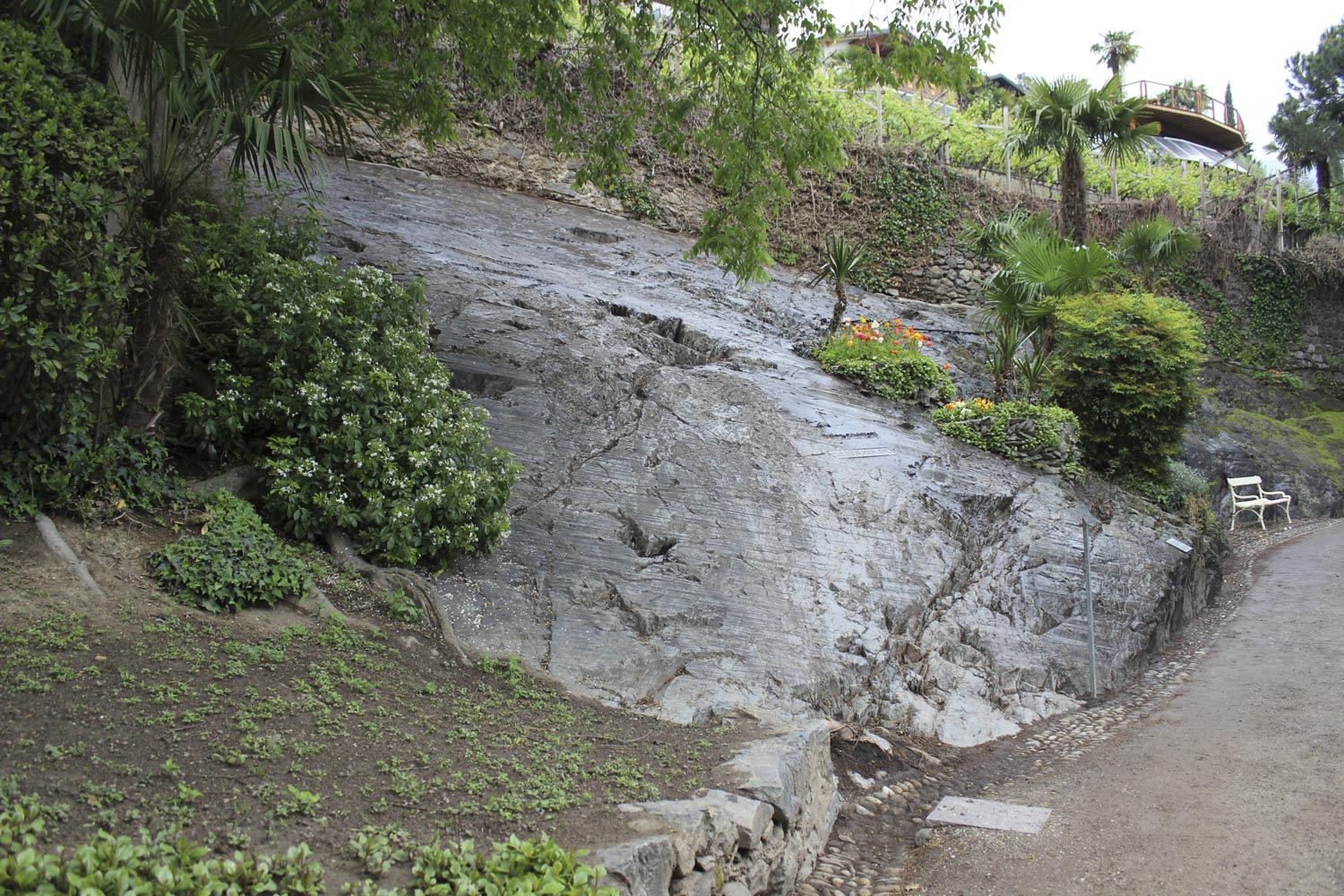
Tappeiner Promenade, Merano.
Roches moutonnées, glacial striations, and large erratic boulders are silent witnesses of glacial history. Examples can be found even far from today’s glaciers, such as the striated rocks along the Tappeiner Promenade in Merano, or the “Alter Schwede” erratic boulder in Hamburg, carried there by the retreating Scandinavian ice sheet.
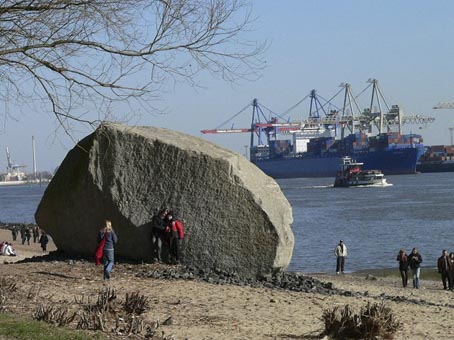
Erratic boulder: Port of Hamburg, Germany.
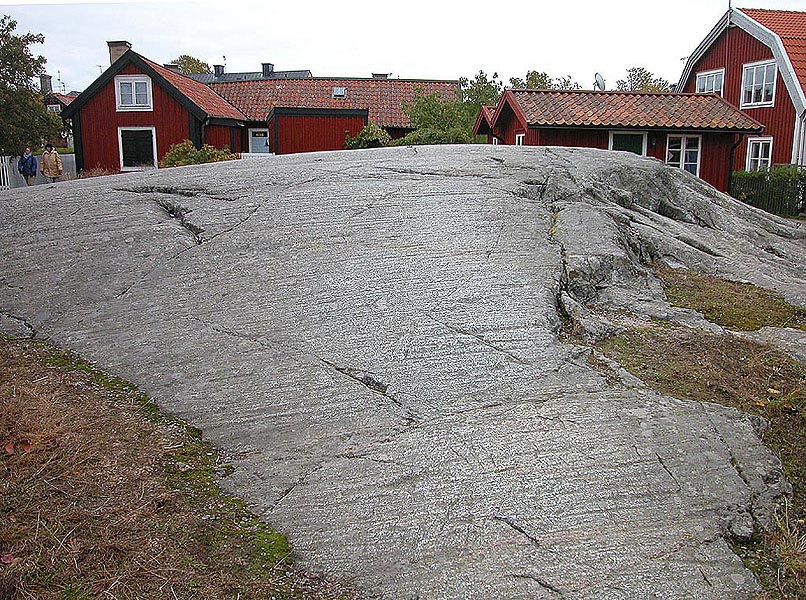
Sandhamn, Sweden.
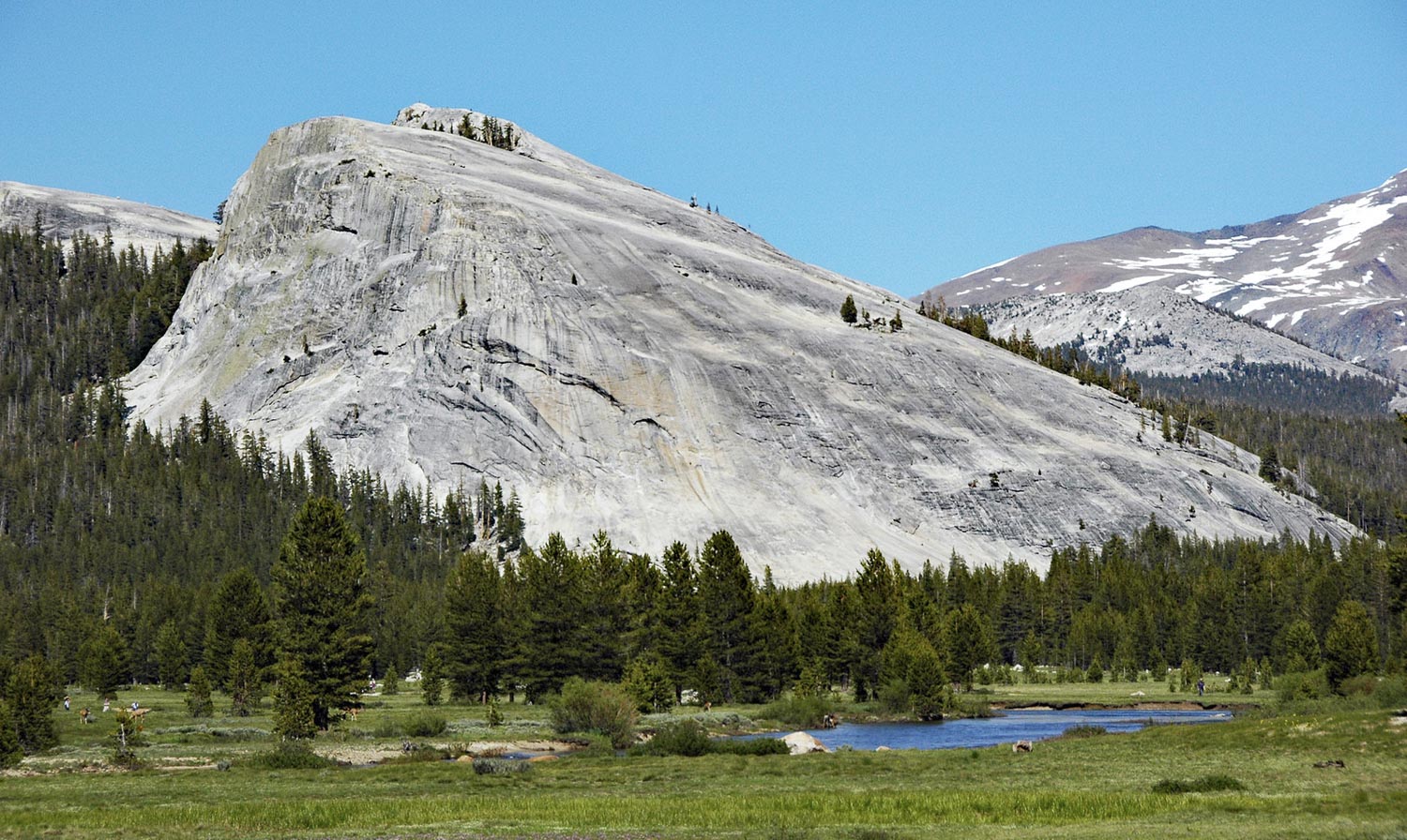
Yosemite National Park, United States.