
Glaciers and moraines
Fragile witnesses of climate change
Above Lago Verde, between Cima Sternai South and Cima di Fontana Bianca, lie three small glaciers now in an advanced state of retreat: the Lago Verde Glacier, the Fontana Bianca Glacier and the Lorchenferner. Together they form a striking natural archive, clearly showing the impact of climate change on the Alps.
3
The Lago Verde Glacier, almost entirely covered by debris today, still displays prominent lateral moraines from the Little Ice Age around 1850, when the ice extended down to the lake.
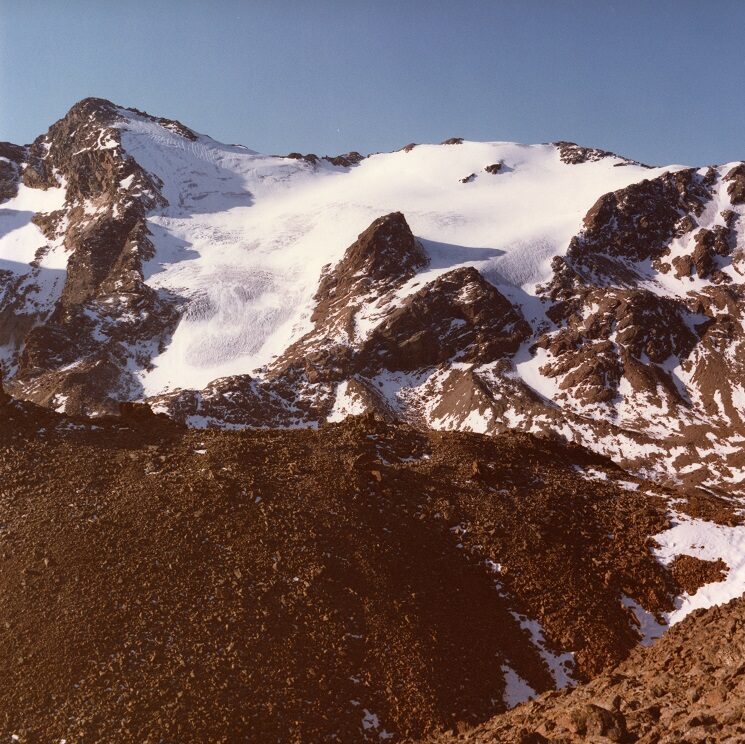
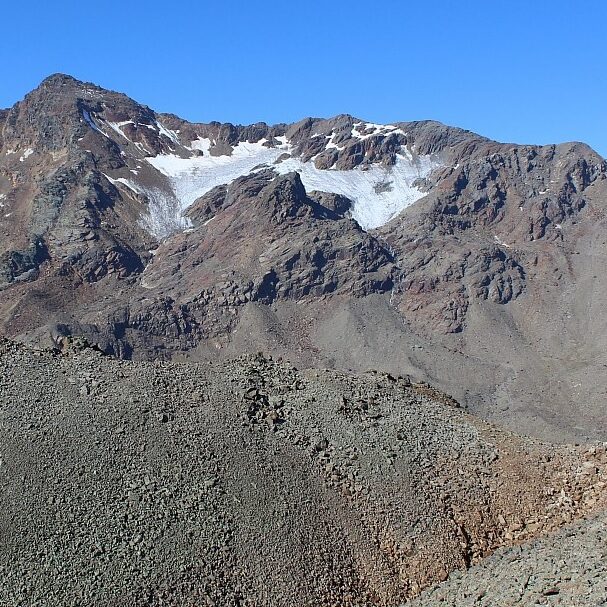
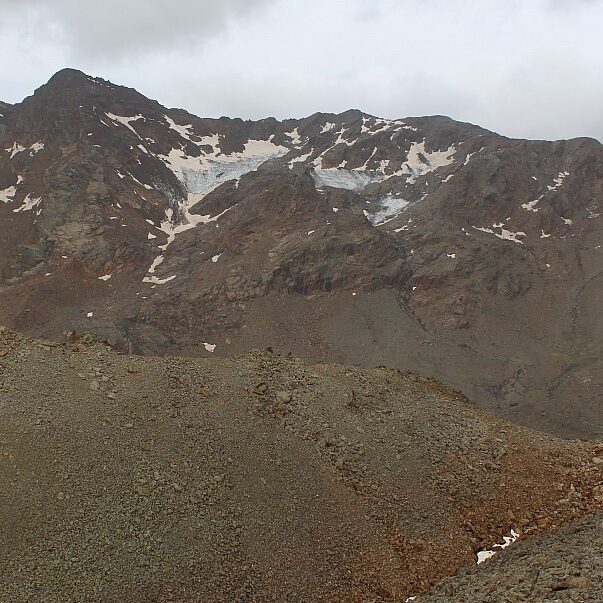
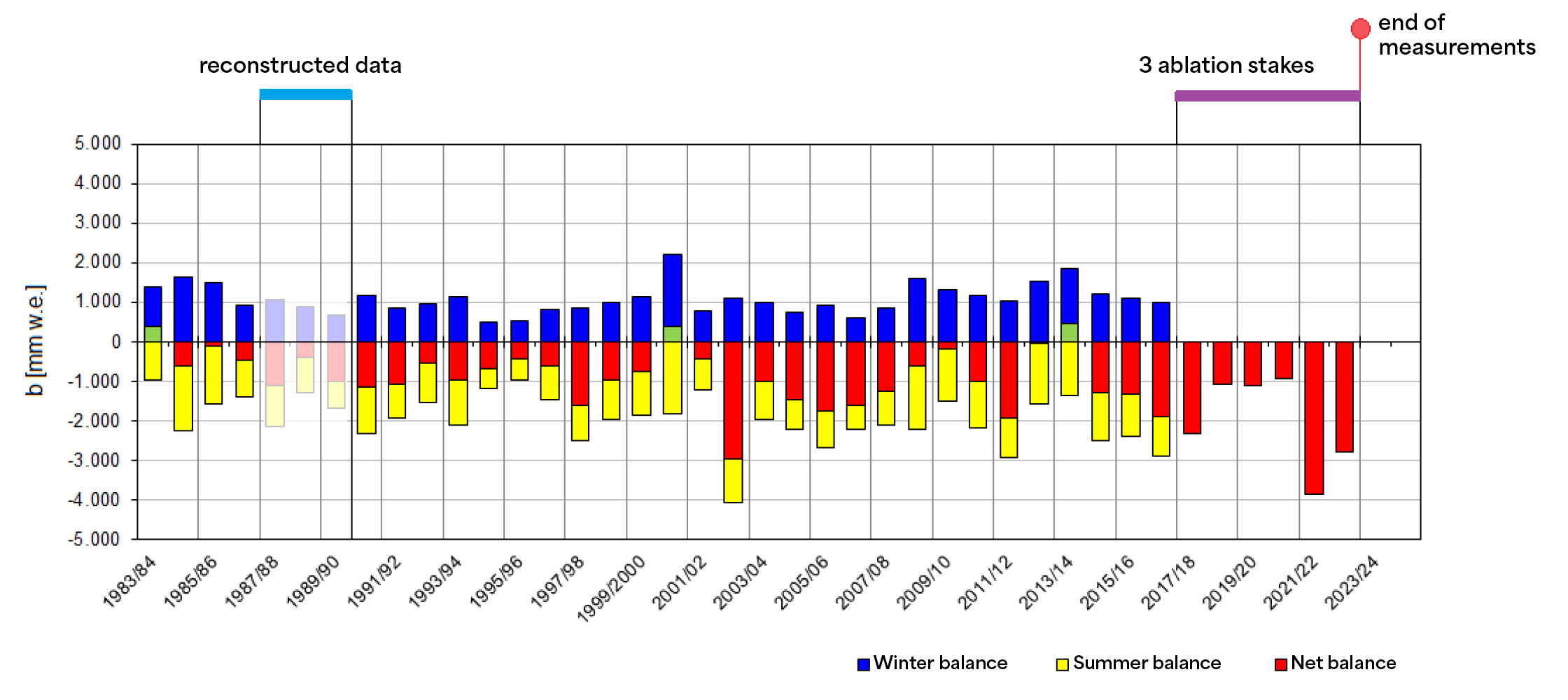
The Fontana Bianca Glacier, the largest of the three glaciers and one of the best-studied glaciers in South Tyrol, has lost more than 85% of its surface area over approximately 150 years—from about 160 hectares in the mid-19th century to just 21 hectares in 2023. In addition to its retreat, the glacier has become increasingly fragmented, a clear indication of its ongoing disintegration. By 2020, the mean ice thickness had decreased to only 16 meters, with a maximum thickness of 30 meters. In the subsequent years, the glacier experienced unprecedented mass loss; in 2022 alone, more than 4 meters of ice melted.
The small Lorchenferner has almost completely vanished, leaving behind exposed rock and debris.
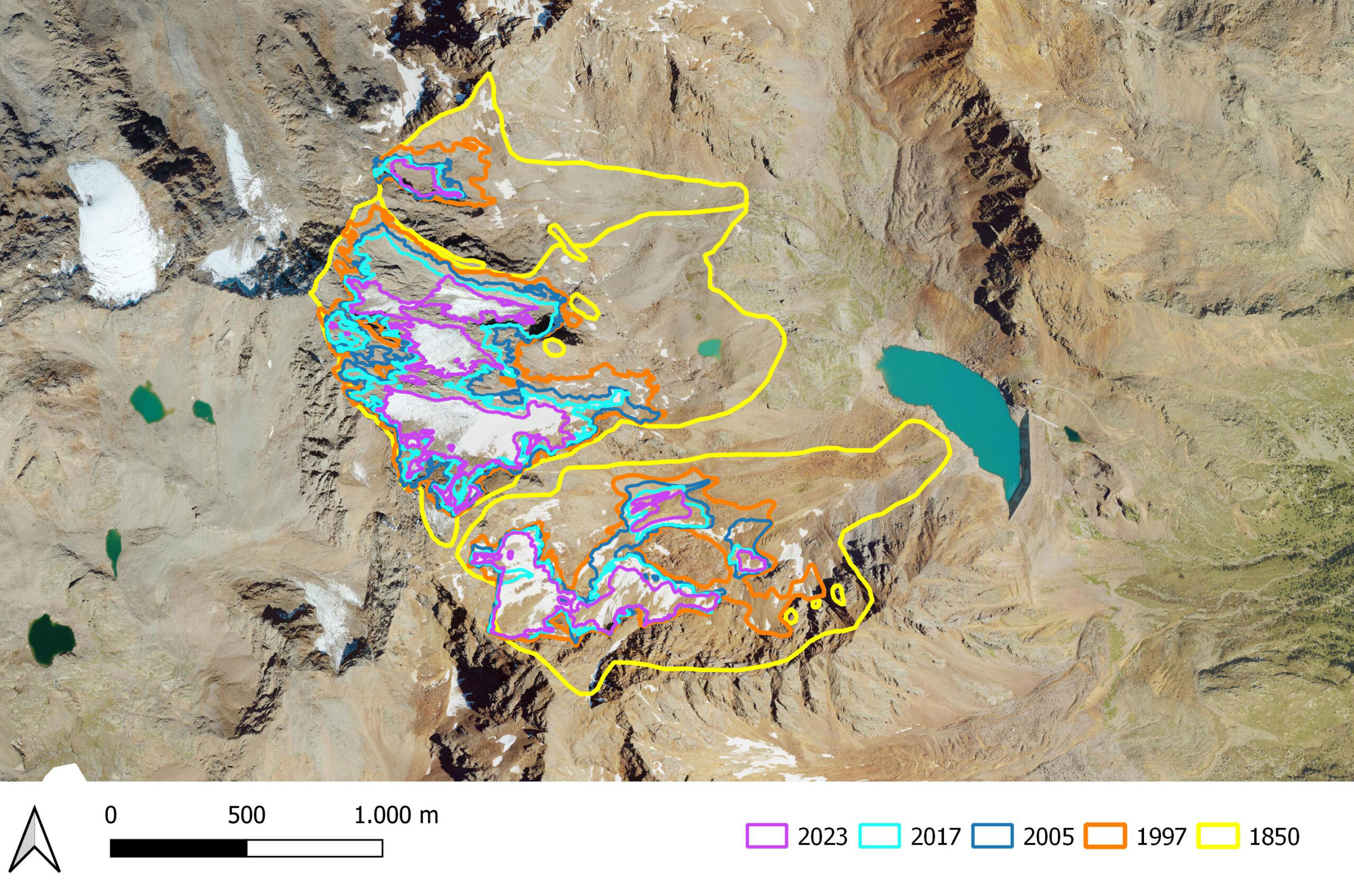
According to scientific projections, the glaciers of Ultimo Valley will have completely disappeared by 2040. They are more than receding ice masses: they are climate indicators, archives of natural history, and vital water resources for alpine ecosystems. Their decline is a clear call to action – urging immediate steps for climate mitigation and adaptation to protect this fragile yet essential heritage.
Further information
Glaciers at risk of extinction:
Local and global deglaciation projections:
goodbye-glaciers.info/regions
goodbye-glaciers.info/glaciers/