Glacial mills and potholes
Water’s hidden pathways
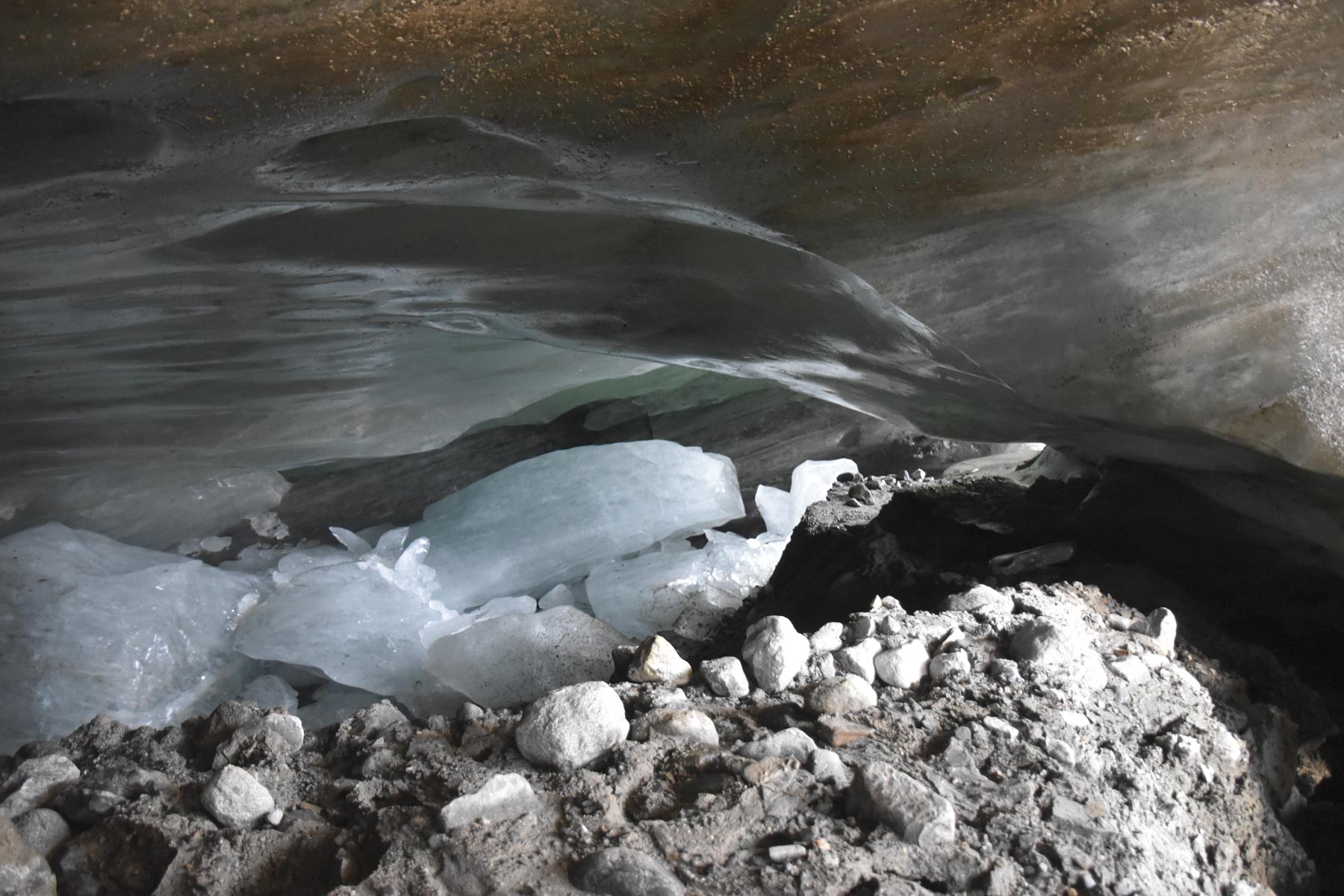
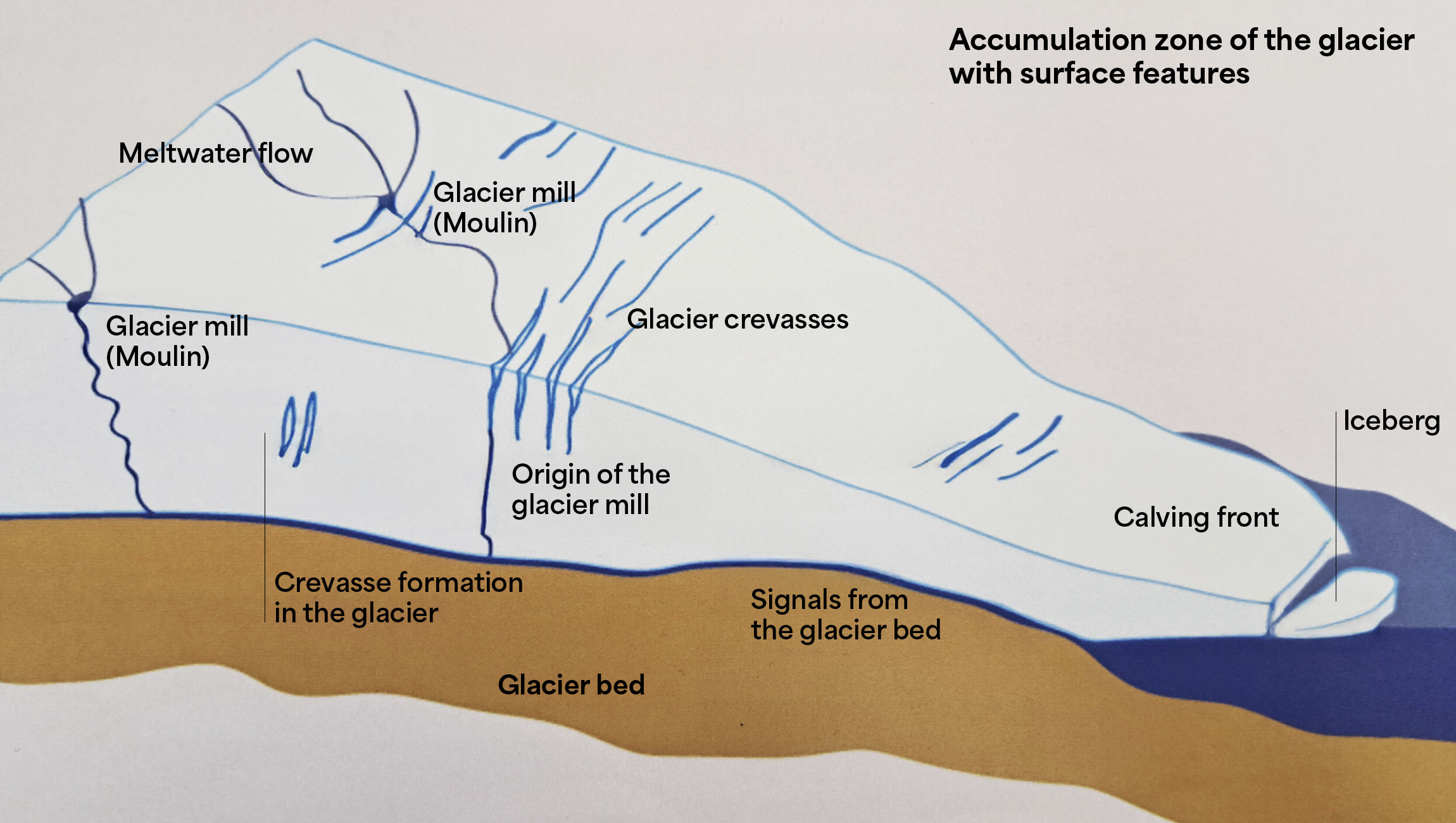
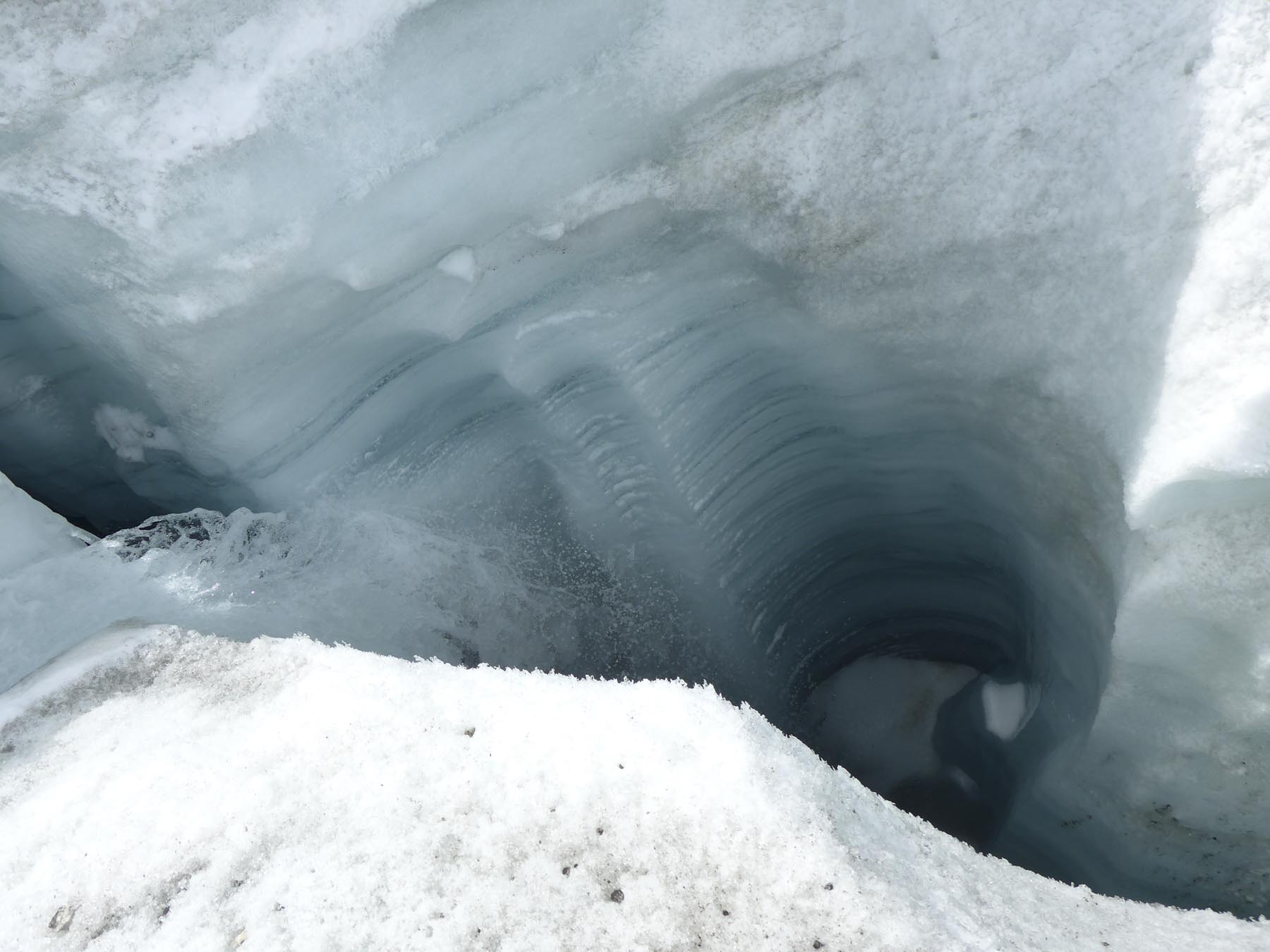
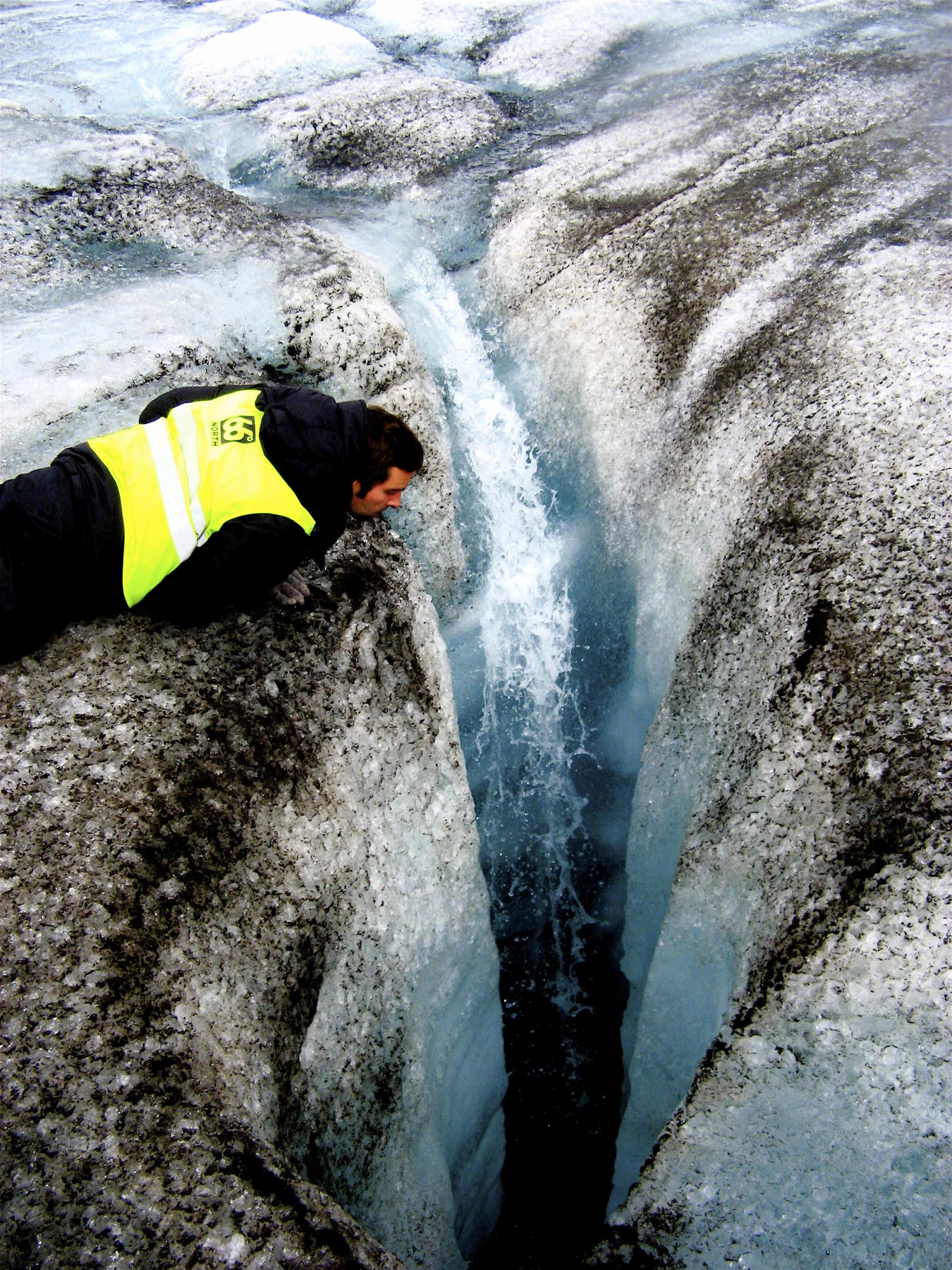
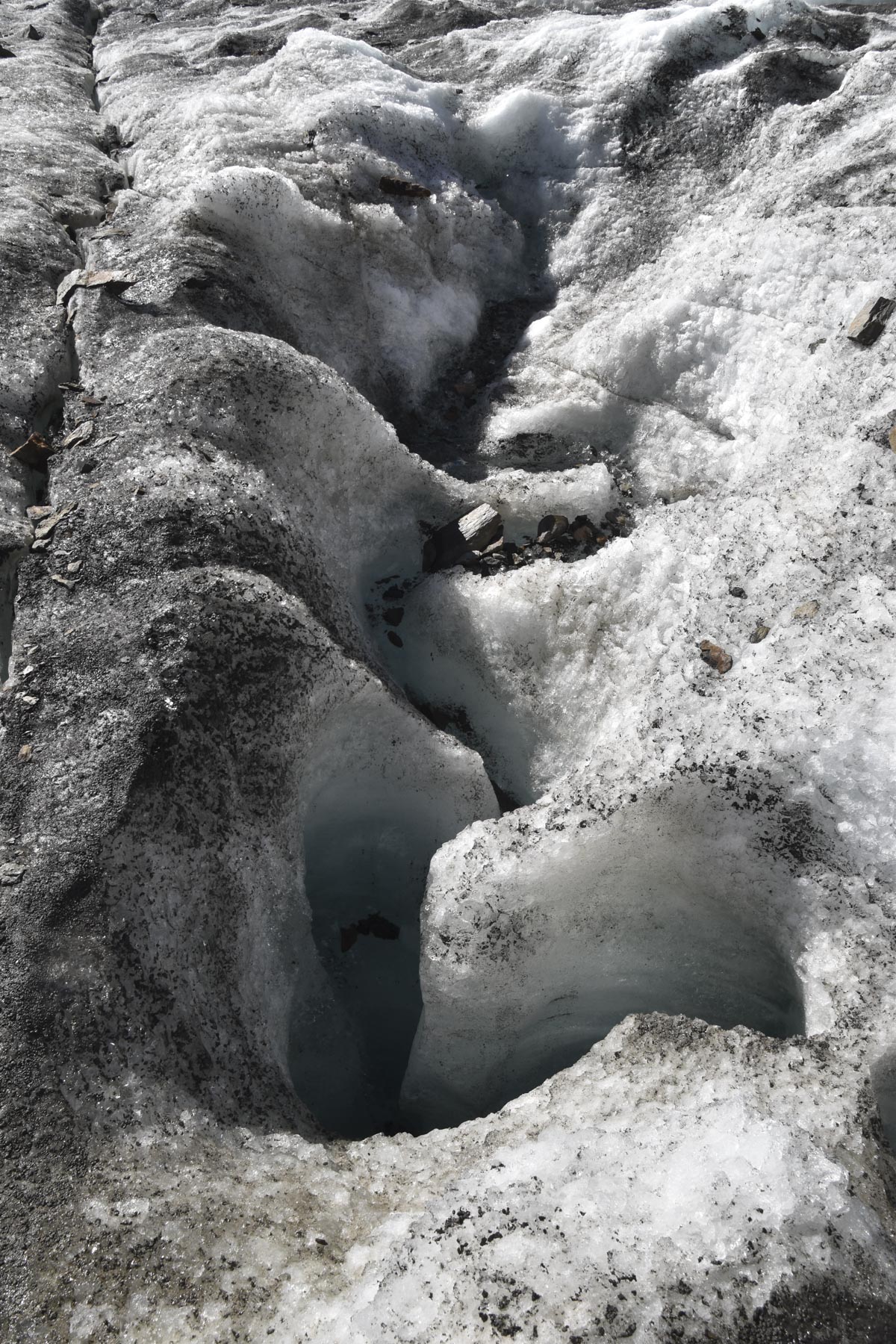
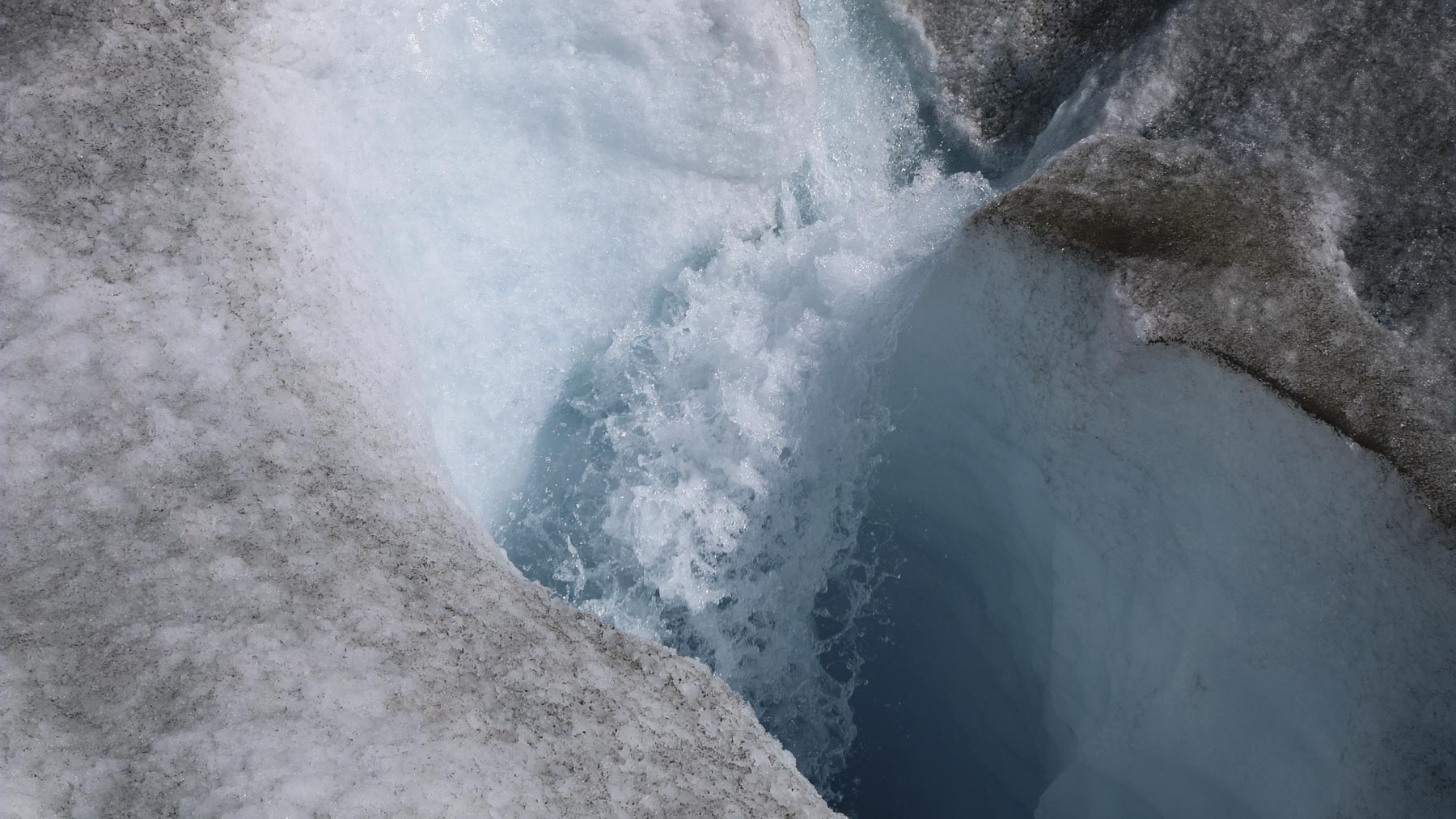
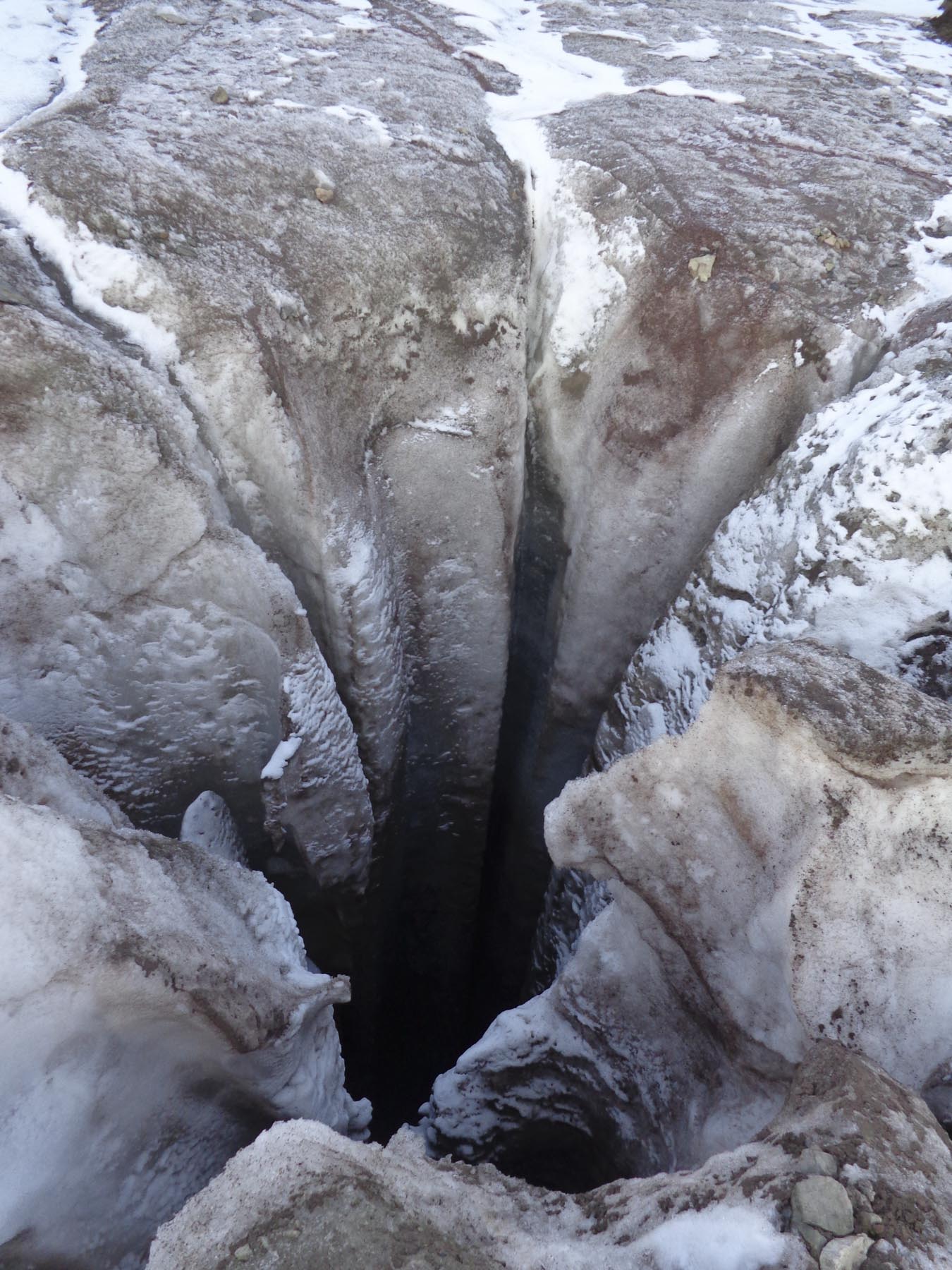
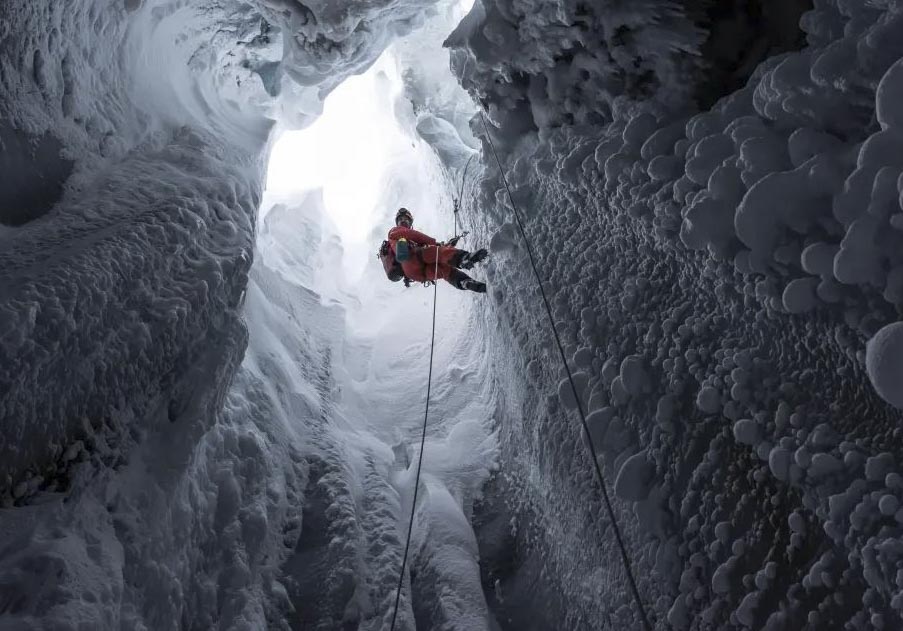
When meltwater seeps through crevasses into a glacier, it sets in motion a powerful erosive process. Laden with sand and rock fragments, the water spirals downward like a natural drill, carving glacier mills (Gletschermühlen): vertical shafts that can reach up to 20 metres wide and hundreds of metres deep. Their swirling flow shapes spiral and intertwined cavities, hidden within the ice.
2
These structures play a vital role in glacial dynamics. They channel meltwater rapidly to the glacier’s base, increasing internal pressure and influencing how fast the ice moves downhill. When reservoirs inside the glacier burst, water can escape at pressures of up to 10 bar (the equivalent of a 100 m water column), flowing out in torrents that last from hours to several days.
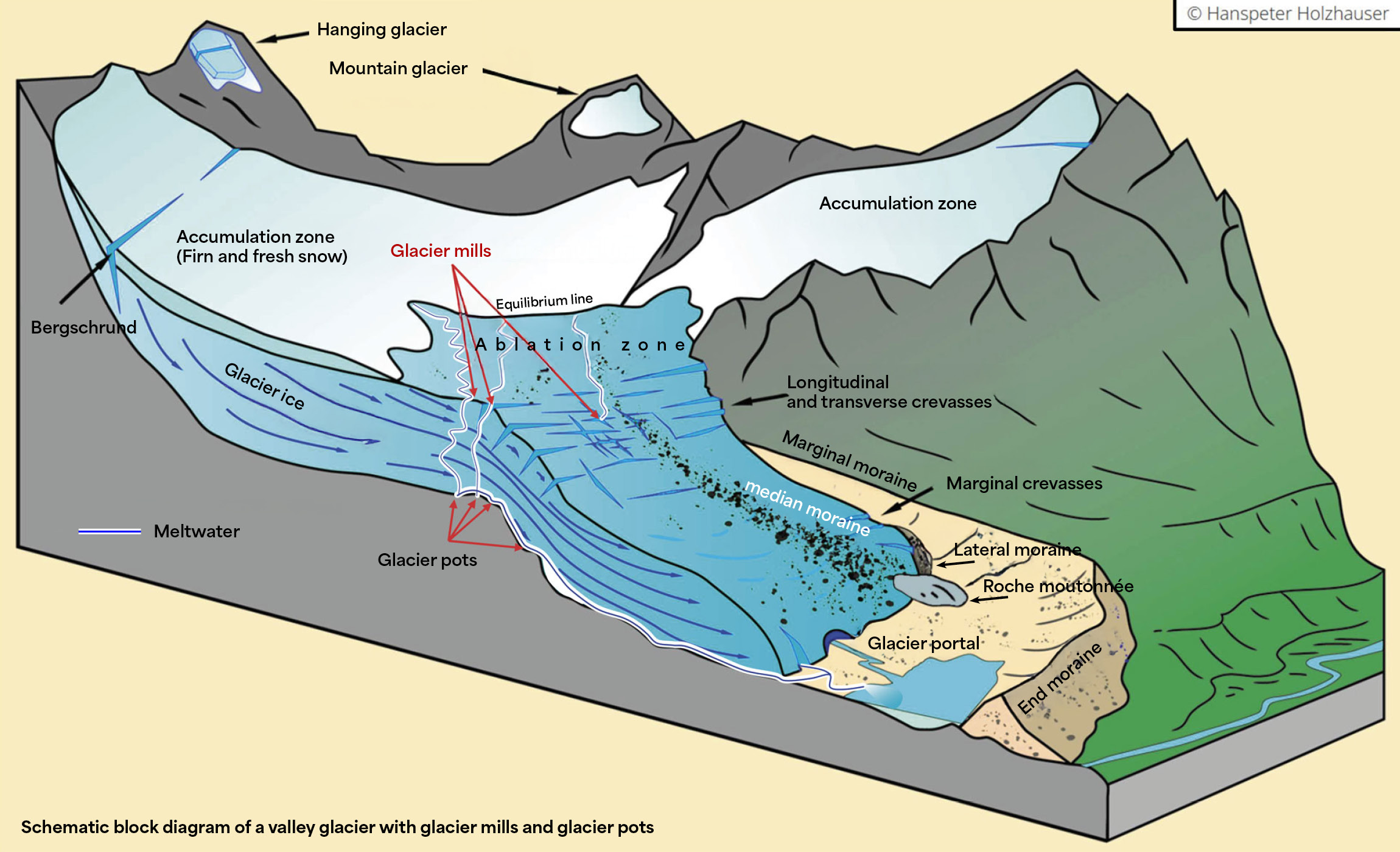
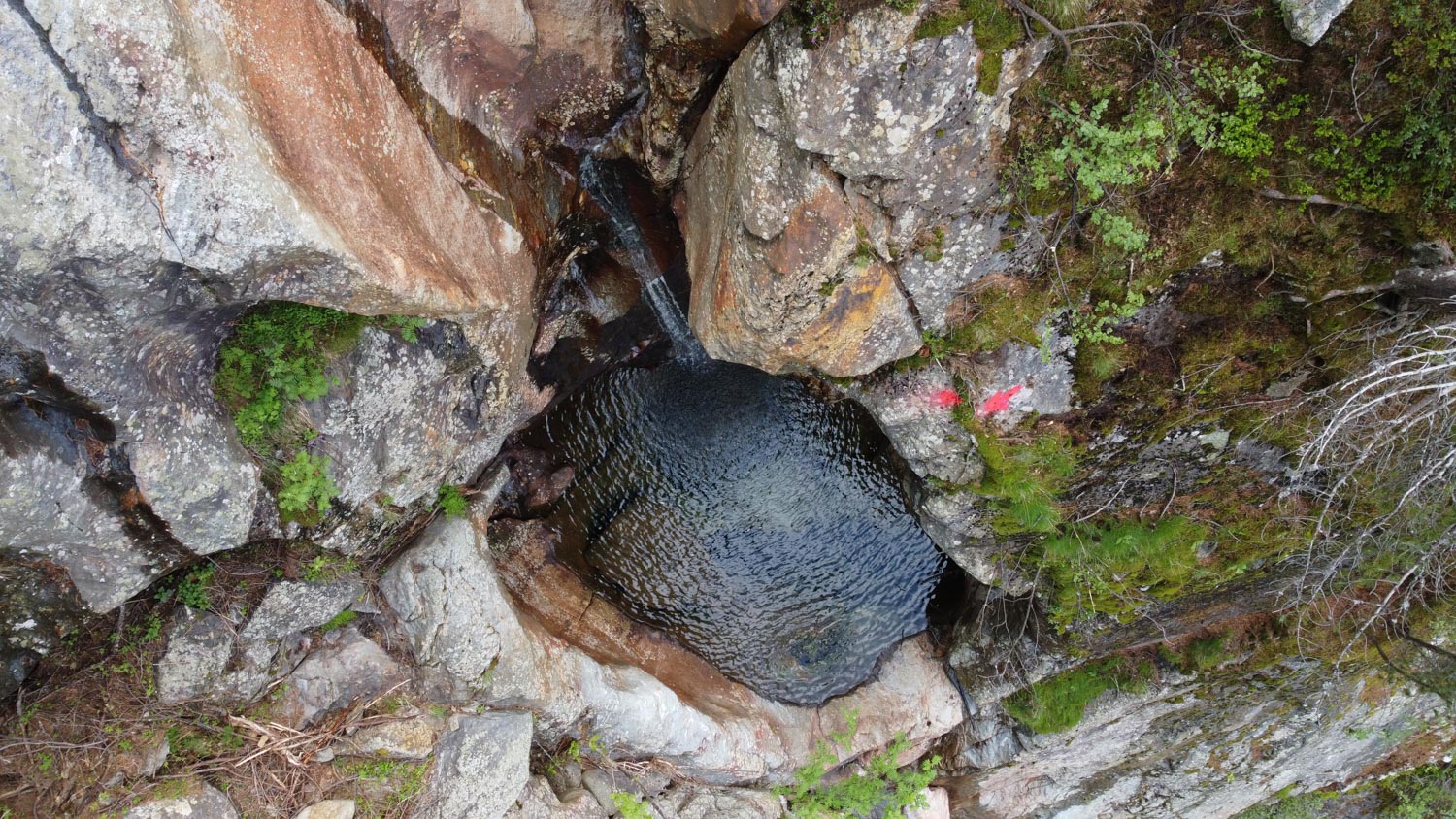
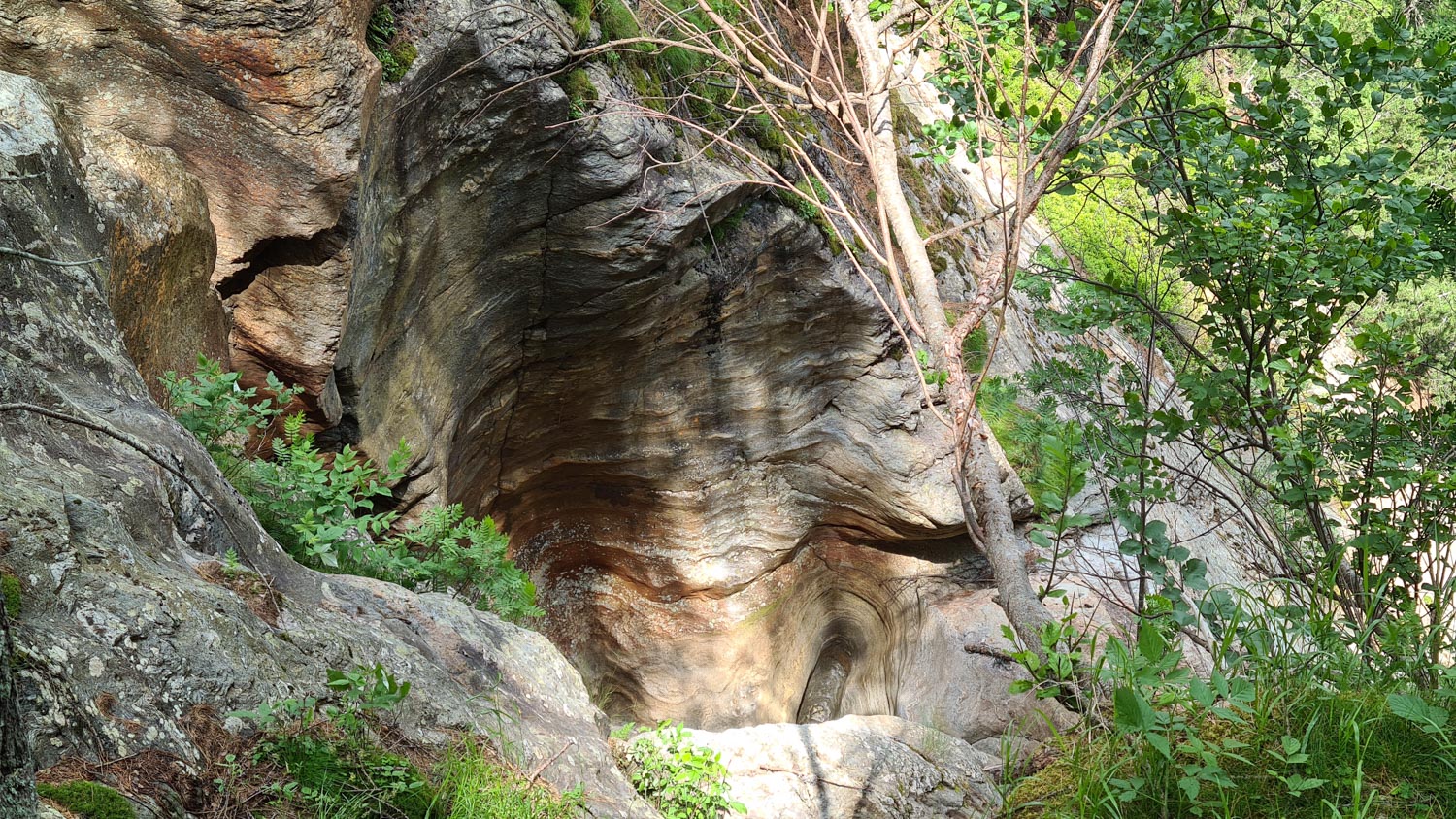
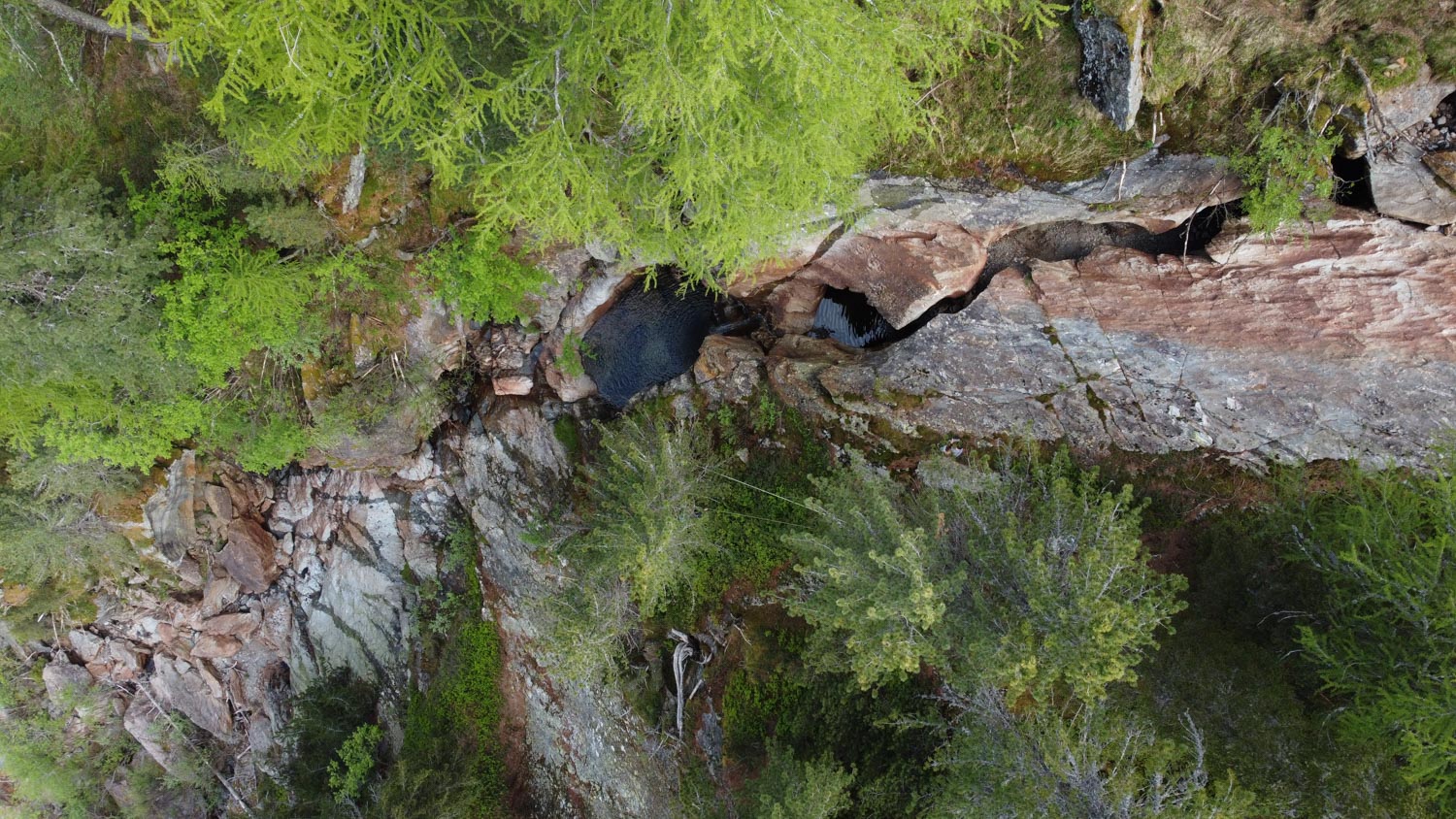
Upon reaching the bedrock, meltwater whirlpools carve glacier pots (Gletschertöpfe): cylindrical or bowl-shaped depressions formed by water currents spinning at speeds of up to 200 km/h. Sand and gravel carried in the flow scour the rock surface, producing cavities from a few centimetres to several metres across. Many of these date back to the last Ice Age.
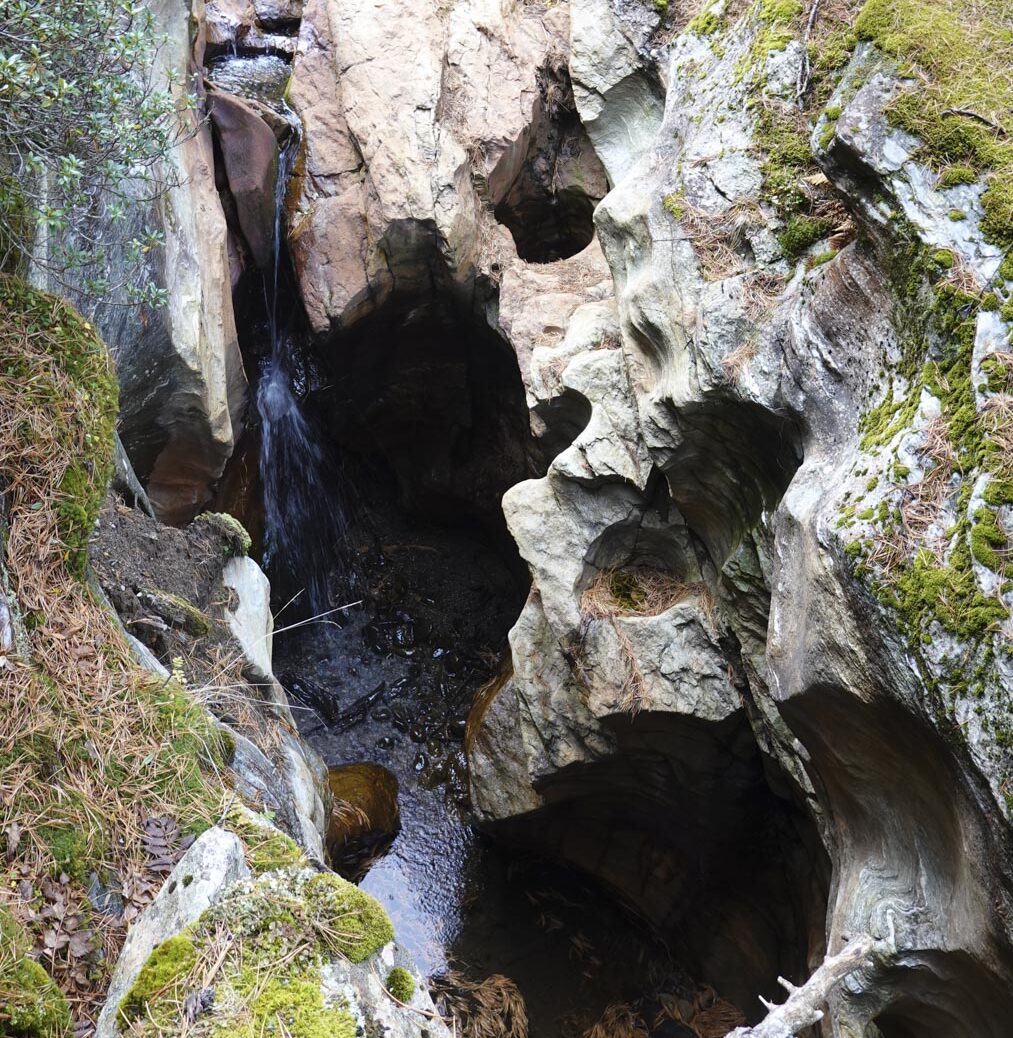
Earlier theories suggested that rotating boulders trapped in the ice had “milled” these holes. Today, we know it is water itself – with its pressure, turbulence and sediment load – that sculpts these remarkable features.

Glacial gate