
A changing landscape
From Glaciers to Rock Glaciers
The flat basins and polished rock surfaces around Lake Lang (Lago Lungo) are silent witnesses of the last Ice Age, when glaciers carved and smoothed the valley. Among the most striking landforms are drumlins – elongated, teardrop-shaped rock ridges aligned with the flow of the ancient ice.
6
After the glaciers retreated at the end of the last Ice Age, a new actor came into play: permafrost. Freeze-thaw cycles, rain, snow, and temperature variations eroded and fragmented the upper rock layers, leading to the formation of the first rock glaciers.
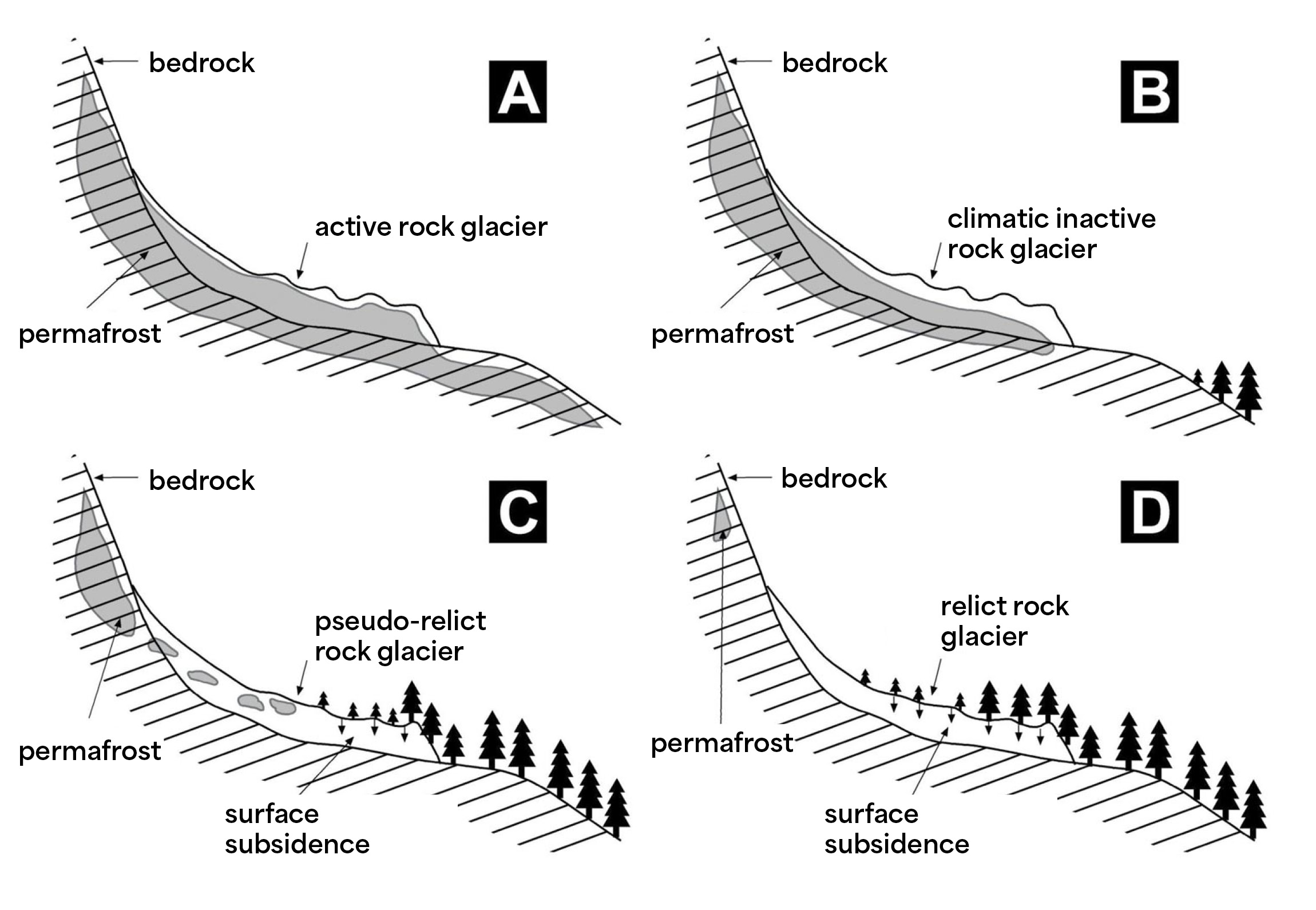
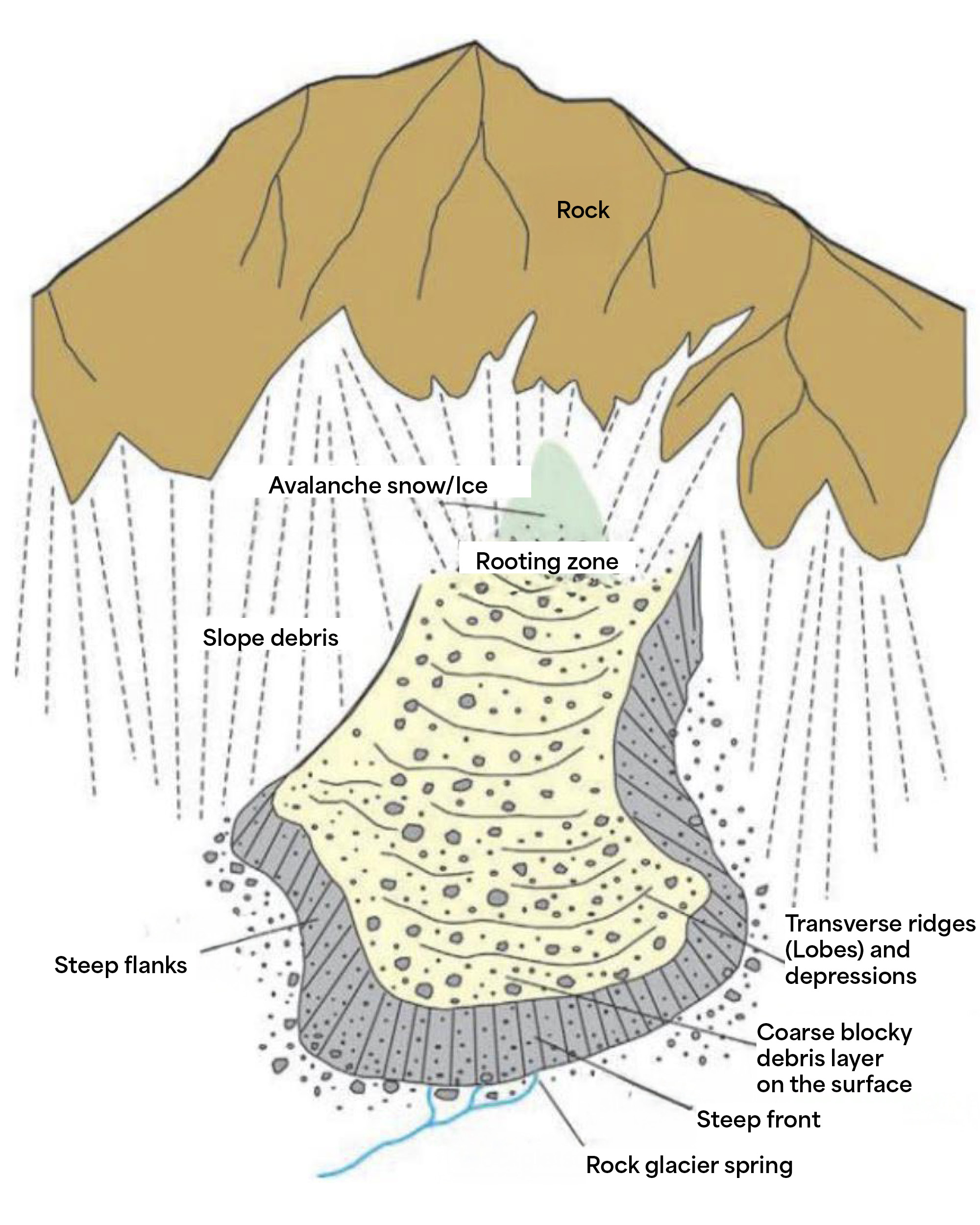
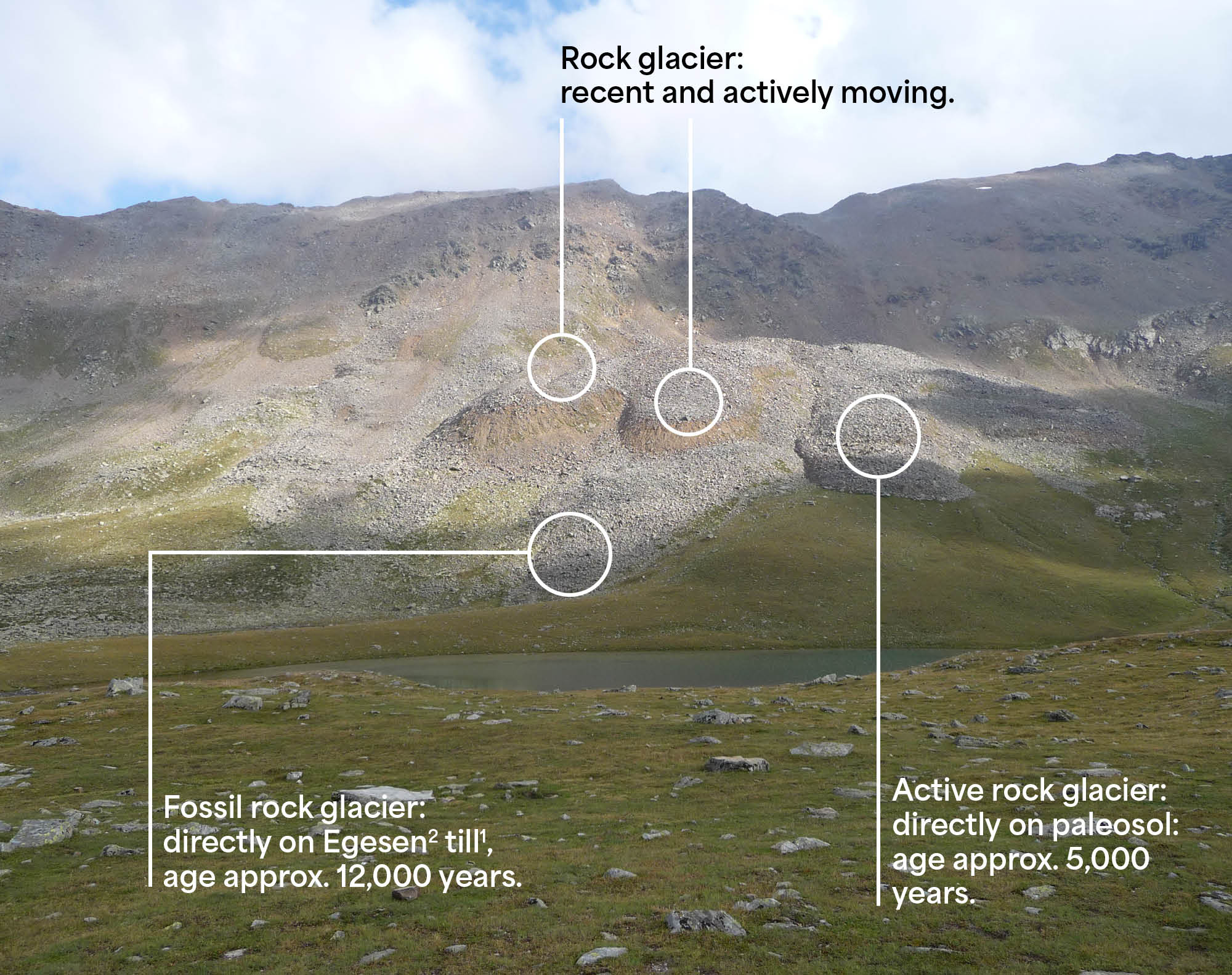
Above Lake Lang, several generations of rock glaciers can be observed: the oldest and now inactive tongues reached the valley floor, where they appear flatter and more stable; the younger and active ones rest above them, with steep, blocky fronts that reveal their ongoing downslope movement.
Radiocarbon (C14) dating of soils beneath these deposits has determined their age: about 12,400 years for the oldest rock glaciers and 5,000 years for the youngest. They are remarkable witnesses to how alpine landscapes continue to evolve long after the great glaciers have vanished.
Till1
1 A moraine conglomerate with a chaotic structure originating from a fluvioglacial environment. It contains faceted and striated clasts, heterogeneously distributed and of varying sizes, embedded in a clay-silt matrix.
From the Egesen Stage 2
2 The last cold snap at the end of the last Ice Age, known as the Younger Dryas—or, in terms of glacial advance, the Egesen Stage.
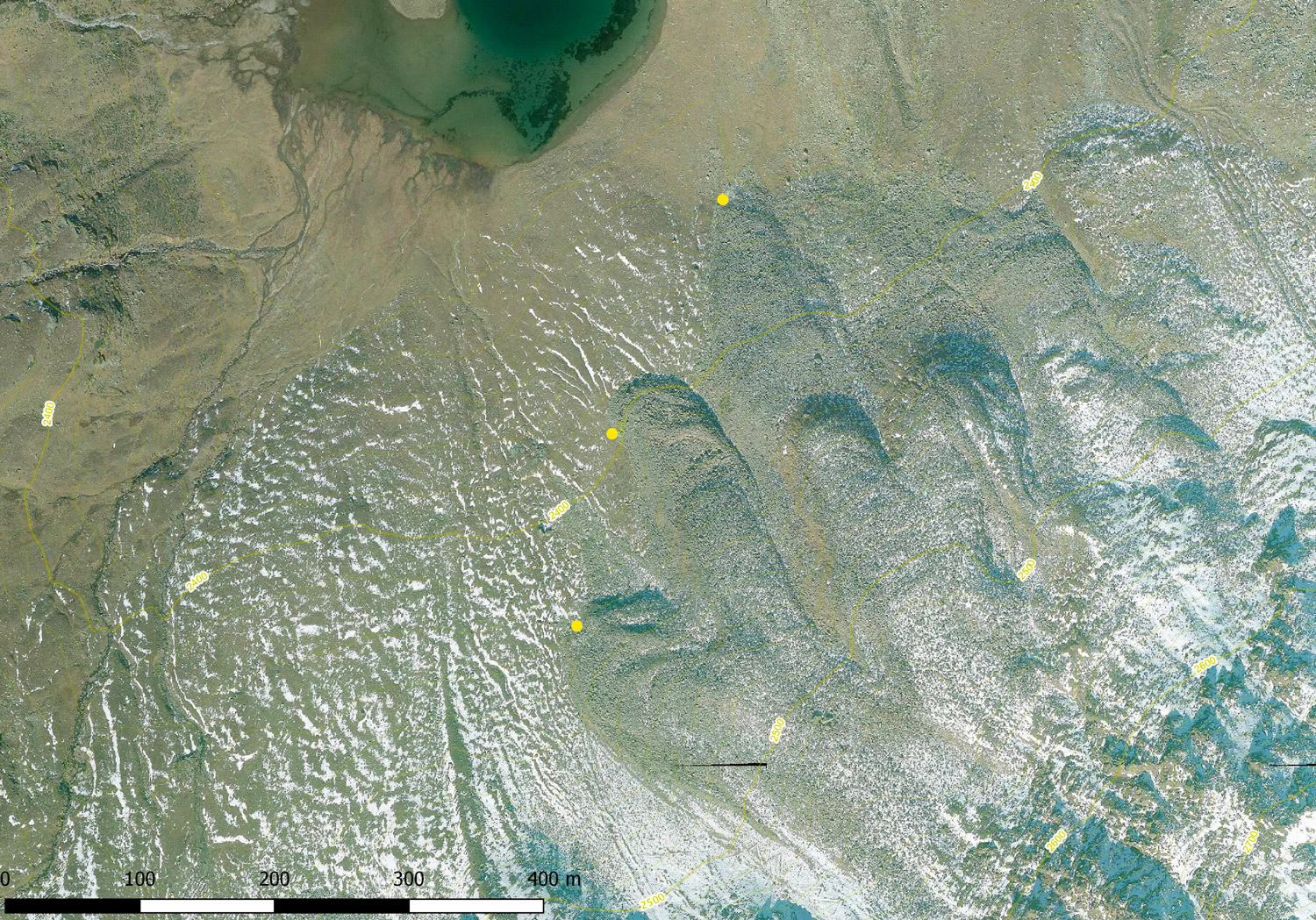
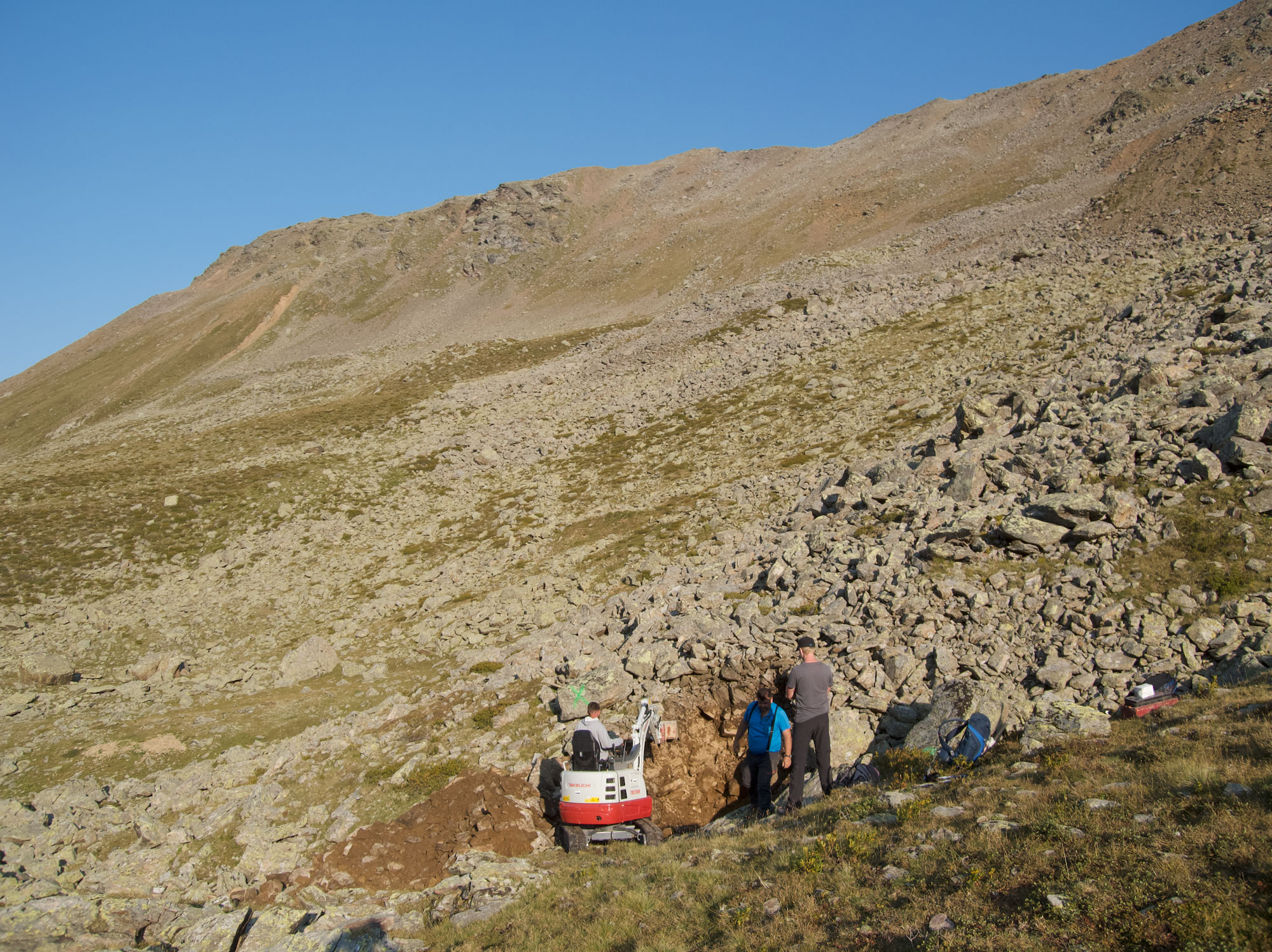
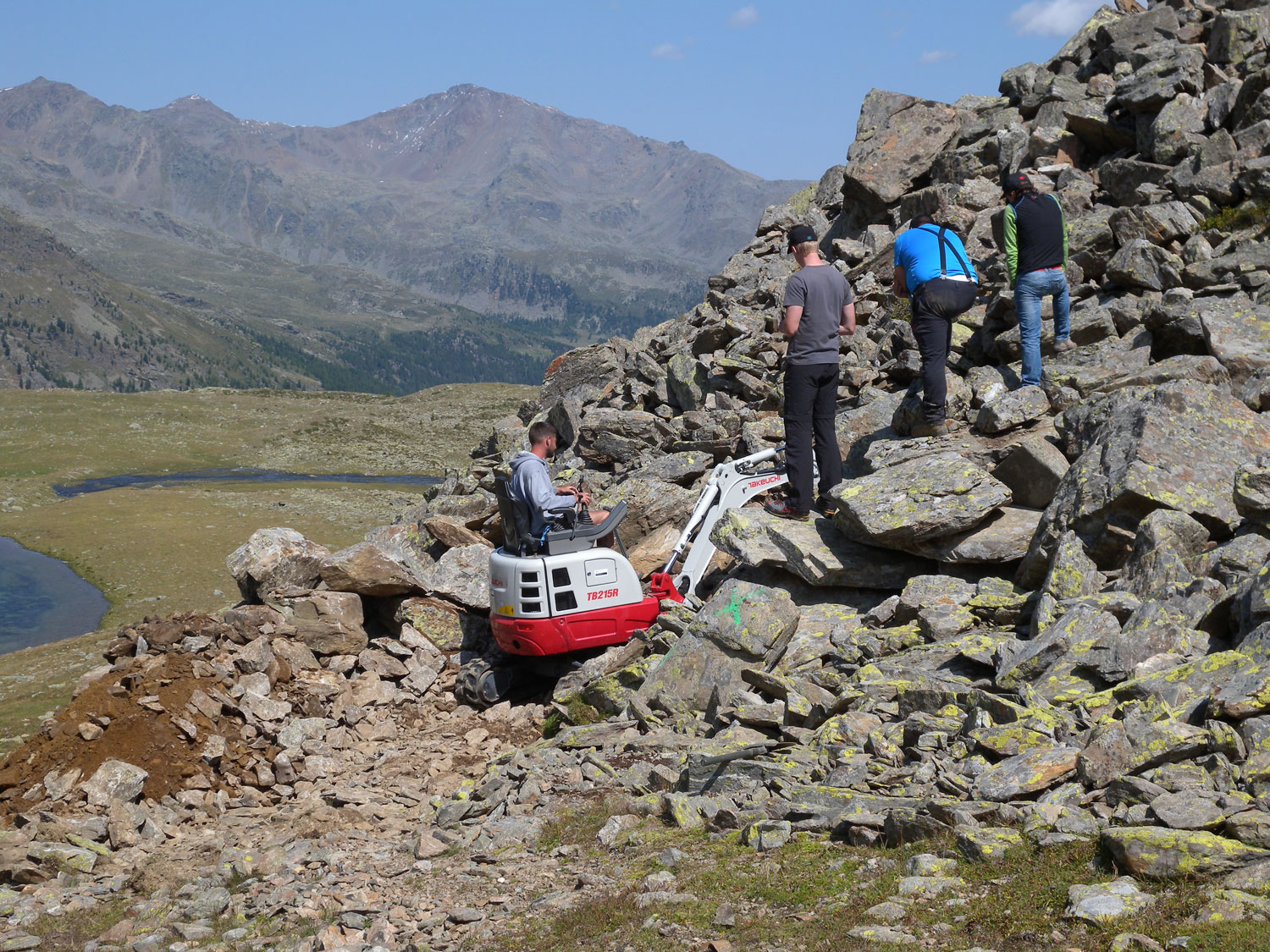
Excavations were carried out at the highlighted points
to determine the composition and structure of the rock masses.

Stratigraphische Untersuchung der Blockgletscher
